
Why Choose Organic Socks for Global Sourcing?
Global buyers are paying closer attention to what touches the skin and where each fiber begins. Organic Socks offer a practical response, especially for brands seeking traceable materials and clearer environmental claims. Textile Exchange’s Organic Cotton Market Report 2023 recorded more than 342,000 metric tonnes of organic cotton production during the 2021/22 season. However, organic cotton still represents a small share of global cotton output. That contrast matters. Demand is growing, but supply remains limited and uneven across regions.
For sourcing teams, certification can turn a promising product into a verifiable one. The Global Organic Textile Standard requires certified organic fibers, controlled processing, social criteria, and chemical restrictions. Its public certification system also helps buyers check approved facilities and certificate validity. Textile Exchange’s Materials Market Report 2024 further shows why fiber selection deserves attention: virgin fossil-based fibers continue to dominate global production, while lower-impact alternatives remain a minority. Organic Socks are not automatically perfect, though. Farming practices, dyeing, knitting, packaging, transport, and worker conditions still require review. A certified yarn cannot correct weak factory management.
The physical details are easy to inspect. Look for a clear fiber composition, a current scope certificate, a transaction certificate, and consistent test records. Ask whether the elastic, dyes, labels, and packaging follow the same standard. Some suppliers may provide attractive claims without enough evidence. That is a sourcing risk, not a marketing detail. Organic Socks can support a stronger product story, but only when documentation matches the actual pair delivered. Imperfect data remains common. Careful buyers should admit that limitation and verify each season.
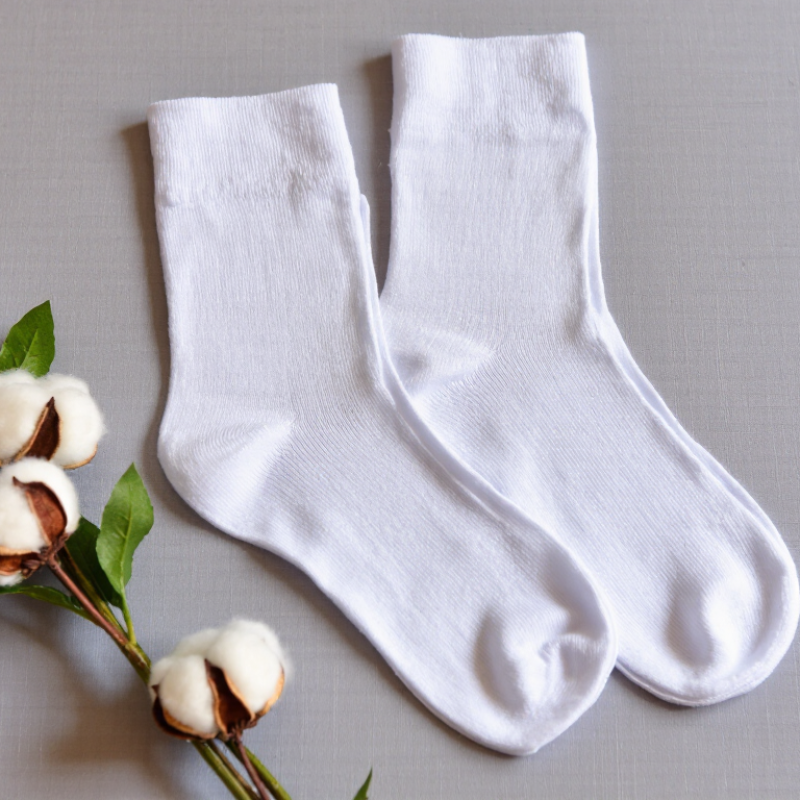
Organic socks use fibers grown under recognized organic farming standards, most commonly organic cotton. Farmers avoid prohibited synthetic pesticides and fertilizers, while soil health and crop rotation receive greater attention. The fiber is harvested, cleaned, and separated from seeds before spinning.
The yarn then travels through several practical stages. Machines twist the fibers into yarn and knit that yarn into sock tubes. Workers shape the heel and toe, add elastic support, and inspect loose threads. Dyes and finishing agents may be applied afterward. Organic fiber does not automatically make the entire sock organic. Processing chemicals, water use, energy sources, and factory controls still matter.
For global sourcing, reliable verification should follow the material from farm to finished carton. Buyers can review transaction records, scope certificates, fiber percentages, dyeing controls, and independent test results. A careful factory audit should also examine wastewater handling, worker safety, and production consistency. Labels can be helpful, but they are not enough. The term “organic” sometimes sounds cleaner than the supply chain really is.
Small details reveal quality. A sock should recover after stretching, feel smooth at the toe seam, and keep its shape after washing. Organic cotton can feel breathable and soft, though some batches may vary in texture. That variation deserves attention, not a convenient promise. Even experienced sourcing teams miss things when paperwork replaces physical inspection. A pre-production sample and random final checks remain useful safeguards.
Organic socks are defined by more than a soft cotton label. Material choice and certification determine their real sourcing value.
Organic cotton remains the leading option for everyday socks. Textile Exchange’s Organic Cotton Market Report 2023 estimated that organic cotton represented 1.4% of global cotton production in 2022. That small share makes traceability important. Look for certified organic cotton, rather than vague terms such as “natural” or “eco-friendly.” Organic wool and hemp can also reduce reliance on conventional fibers, but their supply chains need separate verification. Recycled polyamide may improve durability, although it is not an organic material.
Certification language matters. The Global Organic Textile Standard requires at least 95% certified organic fibers for its “organic” label. Its “made with organic” level requires at least 70%. The Organic Content Standard verifies organic fiber content and chain of custody, but it does not assess every chemical or social issue. OEKO-TEX Standard 100 focuses on harmful substances. It does not prove organic farming. These distinctions are easy to miss.
Tips: Ask suppliers for current certificates, transaction records, fiber percentages, and scope details. Check whether the certificate covers the actual factory, not only a trading office. For wool socks, review animal-welfare standards separately. A recycled blend can be practical. It still needs honest labeling. I have seen sourcing teams treat one certificate as complete proof. That is risky. Certification systems overlap, and none is perfect. Textile claims deserve periodic review.
Organic socks can reduce environmental pressure from the field to the finished product. Organic cotton is grown without many synthetic pesticides and fertilizers. This supports healthier soil and can protect nearby water sources. Farmers may also use crop rotation, compost, and natural pest management. These methods require careful planning, but they can improve long-term soil quality.
In sourcing reviews, I look beyond the word “organic.” Certification helps verify farming practices and supply-chain claims. However, organic fiber does not make every sock automatically sustainable. Spinning, dyeing, washing, packaging, and shipping still consume energy and water. A soft white sock may require less dye than a bright color. Durable knitting can also reduce replacement rates, although durability depends on design and care.
Tips: Ask suppliers for current organic certificates and fiber percentages. Check whether the certificate covers the actual farm or only later processing. Request information about wastewater treatment, dye selection, and renewable energy use. Compare transport methods and packaging weights. Keep records of test results, because sustainability claims can become unclear during international sourcing. Small improvements matter. Mistakes still happen. A realistic evaluation is better than a perfect-looking claim.
Organic socks can support everyday comfort, especially for people with sensitive skin. Certified organic cotton is grown without many synthetic pesticides. That choice may reduce chemical exposure for farm workers and nearby communities. For wearers, the benefit is less direct. The fiber alone does not guarantee healthier socks.
Comfort also depends on dyes, finishes, elastic, and stitching. A soft cuff should stay secure without leaving deep marks. Flat seams can reduce rubbing around the toes. Breathable fabric helps manage moisture during long workdays or travel. However, organic materials can still cause irritation. Some people react to dyes or other components.
Ethical production requires more than a natural fiber label. Responsible sourcing should include certification, supplier records, and traceable processing steps. Buyers should ask where the cotton was grown, spun, dyed, and sewn. Factory audits can review wages, working hours, ventilation, and safety practices. Audits are useful, but they are not perfect. Conditions may change between inspections.
In sourcing discussions, I look for clear documentation rather than broad promises. I also compare fabric weight, shrinkage, colorfastness, and seam quality through samples. A small test matters. After washing, a sock may lose shape or become rough. That result should change the order decision. Organic socks can support health and ethical production, but only when material claims match careful manufacturing and honest supply-chain evidence.
Global buyers sourcing organic socks should examine evidence beyond the word “organic.”
Textile Exchange’s 2023 Organic Cotton Market Report recorded 342,265 metric tonnes of organic cotton in 2021/22, representing about 1.4% of global cotton production.
Supply is limited. Prices and lead times may change quickly. Ask suppliers for current scope certificates, transaction certificates, and exact fiber percentages.
GOTS requirements vary by label grade, so “organic” does not always mean 100% organic fiber.
Product performance also deserves close attention. Request samples with different yarn counts, gauges, and elastane levels.
Test shrinkage, pilling, colorfastness, and wash durability through an independent laboratory.
Textile Exchange’s 2024 Materials Market Report reported global fiber production of 124 million tonnes in 2023, showing the scale of resource pressure.
Yet certification alone does not prove a perfect supply chain. I have seen documents look complete while factory-level traceability remained unclear.
That gap needs honest questioning.
Tips: