
A Filter Basket is a removable component that holds a filter medium while fluid passes through it. In a coffee machine, it supports the grounds and lets brewed coffee flow into the cup. In industrial equipment, a metal basket may trap particles while liquid moves through perforations or mesh. The exact design depends on the fluid, the expected particle size, and the operating conditions.
Think of a sink strainer: liquid slips through its openings, while larger debris stays behind. A Filter Basket works on a similar principle, though its mesh, shape, and material must suit the application. It may sit inside a housing, pump, or processing line. As the basket collects debris, flow can slow and pressure can rise. Regular inspection matters. Small details count.
A basket is not automatically the right choice for every filtration job. Fine particles may pass through coarse openings, while an overly restrictive design can interrupt flow. The practical questions are simple: What needs to be removed? How often can the basket be cleaned? Which material can withstand the fluid and temperature? A named expert quotation cannot be verified from the material supplied, so inventing one would be misleading. This guide instead explains the parts, working process, common types, and maintenance considerations behind a Filter Basket—while noting where real-world conditions can change the answer.
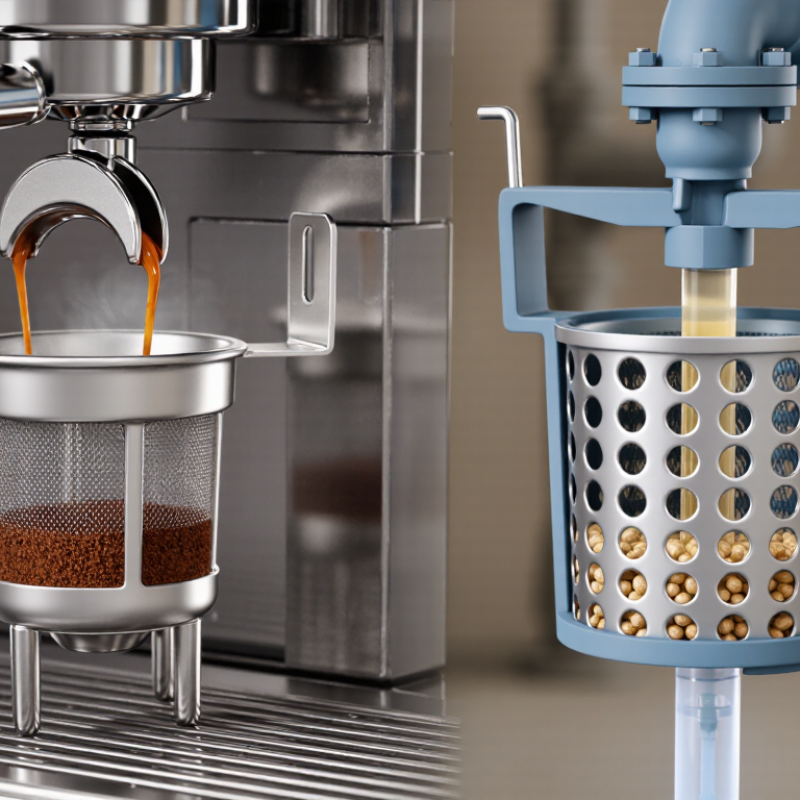
A filter basket is the perforated metal cup that sits inside an espresso machine’s portafilter. It holds the ground coffee in a compact bed, while its holes let brewed liquid pass and keep most grounds back. Hot water moves through the coffee under pressure, so the basket helps shape the flow. It does not create even extraction by itself. Grind size, dose, tamping, and clean holes matter too. Small part. Big effect.
Basket capacity and hole pattern can change how quickly water passes through the coffee. A basket that is too full may press coffee against the shower screen; one that is underfilled can leave a shallow bed. The Specialty Coffee Association’s Coffee Brewing Control Chart gives a reference range of 18–22% extraction yield and 1.15–1.35% dissolved coffee solids for brewed coffee. These figures are not espresso targets, but they show how measured brewing outcomes depend on more than one component. In practice, the basket’s role is easy to overstate.
Tips: Match the coffee dose to the basket’s capacity, and brush its holes clean after use. If flow seems uneven, check the grind and puck preparation before blaming the basket.
A filter basket is the perforated metal cup that holds ground coffee in an espresso machine. Its rim rests in the portafilter, while its base and side walls contain small holes. During brewing, pressurized water passes through the coffee bed and drains through those openings. Small holes matter.
The National Coffee Association’s 2024 National Coffee Data Trends report found that 67% of U.S. adults had coffee the previous day. For frequent brewing, basket construction can affect consistency and cleaning. Most espresso baskets use stainless steel because it resists corrosion and tolerates repeated heating. The basket’s shape, hole pattern, and capacity also influence how evenly water exits. Single-wall baskets expose the coffee directly to brewing pressure; double-wall designs add a second layer to regulate flow. That extra layer can help mask uneven grinding, but it does not fix poor extraction.
Look closely at the holes. Uneven or clogged openings may cause irregular flow, even when the coffee looks level. Stainless steel is sturdy, but fine residue still builds up around the perforations. Rinse after use and inspect the base under good light. Basket materials and designs vary, so “stainless” alone does not guarantee better results. It’s easy to overstate that point. The grinder, dose, and tamp also shape what reaches the cup.
An espresso filter basket is a perforated cup, commonly made from stainless steel, that holds ground coffee while allowing pressurized water to pass through. Single, double, and triple baskets have different capacities; actual dose recommendations vary with basket design and coffee. The bars show typical dose ranges in grams.
A filter basket captures particles by guiding liquid or air through a perforated screen or filter lining. The openings let the flow pass while holding back particles that are too large to fit through. For example, grit may collect against a metal mesh while water continues through the basket. The result depends on the opening size, the particle shape, and the flow rate. A flexible fiber can sometimes slip through an opening that would stop a round grain. Capture is not always perfectly predictable.
As particles build up, the basket’s open area shrinks. Flow may slow, or pressure may rise across the filter. A gradual change can be useful: it signals that the basket needs inspection. But a clean-looking surface does not prove every opening is clear. Fine debris can lodge deep in a mesh or lining. It is easy to assume that a finer screen always works better; in practice, it may clog sooner and need more frequent cleaning. Check the specified particle rating and follow the equipment’s maintenance guidance.
Tips: Rinse from the clean side outward when the design allows it. This can help dislodge trapped grit. Inspect seams and edges, too. Small gaps matter.
A filter basket is the perforated holder that supports coffee grounds while water passes through them. Its shape, hole pattern, and fit influence how evenly water flows. Small details matter. A basket that sits loosely may leak around its edge, while clogged openings can slow brewing.
Common espresso baskets include single-wall and pressurized designs. Single-wall baskets rely on evenly ground coffee and a consistent tamp, making them useful for dialing in espresso. Pressurized baskets restrict the outlet, helping produce a layer of crema even when the grind is less precise. They can be practical for pre-ground coffee, though the result may taste less balanced. Fit comes first.
Drip coffee makers often use flat-bottom or cone-shaped baskets. Flat-bottom baskets spread grounds across a wider bed, while cone shapes concentrate them into a narrower layer. Either can work well when the grind and water flow suit the design. Paper liners catch fine particles and some oils; reusable mesh lets more oils pass, creating a fuller cup. Mesh needs careful cleaning. A basket may look clean but still hold old coffee oils, which can dull fresh flavors. There is no perfect shape for every brewer, so matching the basket to the machine and checking the brew matter more than appearance alone.
| Filter Basket Type | How It Works | Typical Construction | Common Applications | Key Consideration |
|---|---|---|---|---|
| Perforated Basket | Liquid passes through regularly spaced holes while particles larger than the openings remain inside the basket. | Usually made from perforated sheet metal, often stainless steel, with a supporting frame. | Coarse filtration in water systems, process piping, and pump protection. | Suitable for larger particles; the hole size determines the approximate cutoff. |
| Woven-Wire Mesh Basket | Fluid passes through interlaced wires, which retain particles according to the mesh opening. | Woven stainless-steel wire mesh fitted to a rigid basket or support frame. | Industrial liquid filtration, food processing, and protection of downstream equipment. | Provides finer screening than many perforated baskets, but fine mesh may clog more quickly. |
| Wedge-Wire Basket | Precisely spaced profile wires create narrow slots that let fluid pass while retaining solids. | Profile wires joined to support rods, commonly in cylindrical or curved shapes. | Water treatment, well screens, pulp and paper processes, and solid-liquid separation. | Slot width and basket strength should match the solids, flow, and operating conditions. |
| Duplex Strainer Basket | One Basket Filters the flow while a second chamber can be brought online, allowing the first basket to be cleaned. | Two strainer chambers connected by a changeover valve, each containing a removable basket. | Continuous-flow systems where stopping the process for routine cleaning is undesirable. | Correct valve operation is needed to maintain flow and isolate the basket being serviced. |
| Simplex Strainer Basket | A single removable basket captures debris as fluid passes through the strainer housing. | A housing with one basket, a cover, and inlet and outlet connections. | Intermittent-duty piping, cooling-water lines, and general equipment protection. | The system may need to be shut down or bypassed while the basket is removed for cleaning. |
| Espresso Filter Basket | Ground coffee is held in a small perforated basket; pressurized water flows through the coffee and basket holes. | A precision metal cup designed to fit an espresso portafilter. | Espresso machines in cafés and home coffee setups. | Basket size, dose, grind, and distribution affect extraction; this is a brewing component rather than an industrial strainer. |
| Reusable Pour-Over Basket | Hot water flows through coffee grounds and a fine reusable mesh or perforated filter into a serving vessel. | Typically a shaped stainless-steel mesh or perforated metal insert. | Manual pour-over coffee brewing where a reusable filter is preferred. | Its openings allow more oils and fine particles through than many paper filters, which can change the cup’s texture. |
A filter basket holds the coffee grounds while water passes through its openings or filter material. Its size and shape affect how evenly water flows, so check that a replacement matches your brewer. Fit matters. Compare the basket’s diameter, depth, rim, and capacity with the original. For reusable metal baskets, inspect the mesh or perforations under bright light. A bent edge or uneven holes can cause poor seating or uneven extraction.
Clean the basket after each use. Empty the grounds, rinse away residue, then brush the corners and holes with a soft brush. Coffee oils can build up even when the basket looks clean. Use a mild cleaner suitable for brewing equipment when needed, and rinse it thoroughly. Avoid abrasive pads; they can scratch surfaces or damage fine mesh. Let the basket dry fully before storage. I sometimes miss a tiny clogged hole, so checking against a light is worth the extra few seconds.
Replace a basket when it is warped, cracked, corroded, or no longer fits securely. Persistent stale flavors or slow, uneven flow may also point to damage or buildup that cleaning cannot remove. Not glamorous. If the basket is only clogged, try a careful cleaning before replacing it. For a new one, confirm the material and intended brewing method, and keep the old basket nearby for a direct size comparison.