
Choosing a Waist Trainer Factory in China takes more than comparing prices or browsing polished product photos. The right partner should show how materials, patterns, stitching, and inspections come together on the production floor. Small details matter: seam tension, hook alignment, fabric recovery, and consistent sizing across samples.
Quality expert Joseph Juran’s principle applies well to factory sourcing: “Quality does not happen by accident.” A capable supplier should explain its inspection process, provide clear material specifications, and discuss how it handles fit feedback. Ask whether the company manufactures products directly or works through other facilities. Request samples in multiple sizes, then examine seams, closures, labels, and measurements under consistent conditions. Keep records. They help.
A factory visit or live video walkthrough can reveal practical details that a catalog cannot, such as workstations, material storage, and quality checks. Still, appearances are not proof. Confirm claims with documents, sample orders, and specific questions about production capacity and communication. A low quotation may exclude details that matter later. Even experienced buyers can miss a weak point when timelines feel tight. This guide explores how to assess a Waist Trainer Factory with care, compare suppliers fairly, and build a sourcing decision on observable evidence—not promises alone.
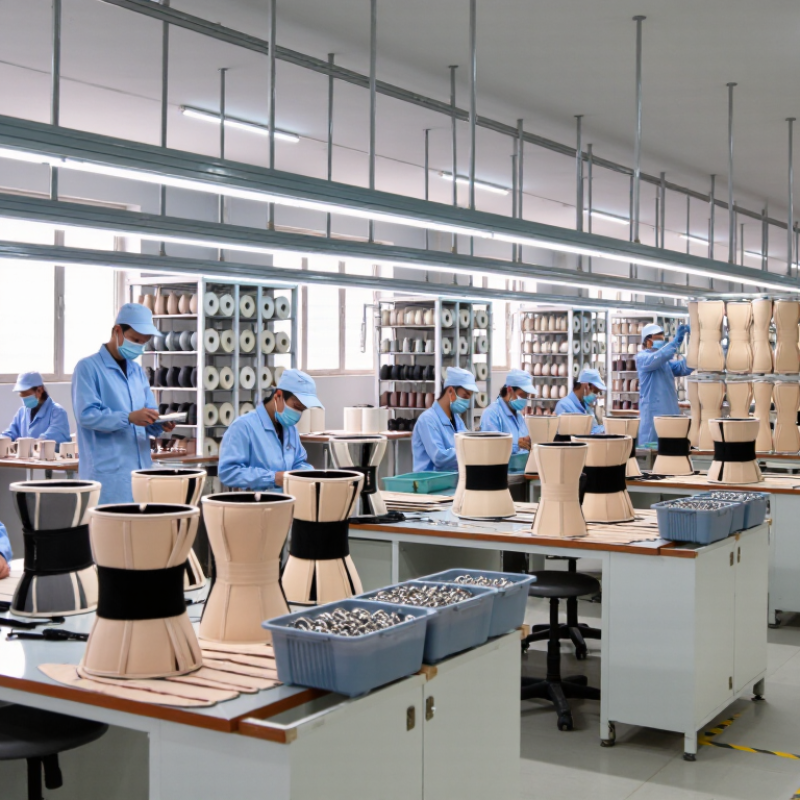
Before contacting a waist trainer factory, write a measurable product brief. Specify fabric composition, garment weight, stretch direction, compression level, panel count, closure type, size range, and target measurements. In 2024, Textile Exchange reported that global fiber production reached 124 million tonnes in 2023. Material choice matters at scale, so request fiber-content records and traceability documents for the exact fabric proposed. A sample that feels firm may still lose its shape after repeated wear.
Set acceptance criteria before sampling. Ask the factory to test stretch and recovery, seam strength, colorfastness, and closure durability, using suitable methods such as ASTM D4964 for elastic fabrics. Request the test conditions and results, not just a “passed” label. Agree on an inspection plan, defect definitions, and tolerances for measurements; ISO 2859-1 provides sampling procedures, but it does not replace clear product-specific limits. I have seen sizing details get overlooked. That is costly.
Tips: Send a marked sample with a tape measure showing key points, such as waist width and panel height. Test the garment after washing and repeated stretching. Keep one approved sample as the reference for production checks.
Waist trainer suppliers are spread across China. A nearby material network can matter more than a city’s reputation. Guangdong is a practical starting point. Guangzhou and Dongguan offer broad garment sourcing, trims, sampling, and freight connections. Shantou’s underwear-making cluster may suit buyers seeking stretch fabrics and close-fitting construction. Still, a cluster’s reputation is not proof of a factory’s capabilities.
Zhejiang, including Yiwu and nearby manufacturing areas, can be useful when buyers need elastic components, packaging, and flexible supplier coordination. Do not assume every workshop makes compression garments. Confirm whether pattern development, boning channels, hook-and-eye panels, and size grading are handled in-house or subcontracted. That detail can affect lead times and consistency.
Compare regions by function, not just quoted price. Ask each candidate for a recent sample, fabric details, and photos of the production floor. Check seam consistency, waistband recovery after stretching, and reinforcement around closures. Then confirm the minimum order quantity and sample-to-bulk approval steps in writing. Small checks matter. Ask directly whether the listed address is a factory or a sourcing office, and verify what production happens on-site.
A regional sourcing comparison for identifying manufacturing areas to explore.
Ratings use a 1–5 qualitative screening scale, not official production statistics. They reflect a comparative assessment of regional apparel ecosystems, access to materials and trims, export logistics, and OEM flexibility. Use this chart as a starting point, then verify each supplier’s experience with waist trainers, compression fabrics, fit development, and quality control.
A strong waist trainer factory should be able to show how its products are made, not just display polished photographs. Ask about pattern development, fabric sourcing, stitching equipment, and quality checks. Request a sample that matches your intended fabric, closure, and size range. Inspect the seams, elastic recovery, zipper movement, and measurements after gentle wear. Small inconsistencies matter. A sample alone, however, cannot confirm steady production quality.
Tips: Request copies of relevant certificates and check their scope, validity dates, and issuing organizations. Certifications vary by product and market, so avoid treating one document as proof of every capability. Ask for recent inspection records or a video walkthrough of the production floor.
Production experience should be specific. Ask how long the factory has made compression garments, what order sizes it typically handles, and how it manages peak-season schedules. A factory may have modern machines yet limited experience with your design. Discuss tolerances, defect handling, and who approves changes before bulk production. If answers are vague, request details in writing. I would not rely on a single visit or a confident sales call; both can leave important questions unanswered. Compare what the factory says with samples, records, and the people responsible for quality control.
| Evaluation Dimension | What to Verify | Evidence to Request | How to Assess It |
|---|---|---|---|
| Factory identity and site | Confirm that the supplier’s registered business activity and actual production location are consistent with the proposed manufacturing arrangement. | Business registration details, factory address, production-area video tour, and an in-person or independent audit where appropriate. | Check that the documentation, facility, and contracting entity are consistent. Clarify whether production is performed in-house or subcontracted. |
| Relevant product experience | Look for experience with comparable compression garments, such as waist trainers, shapewear, corsets, or other structured stretch garments. | Non-confidential product samples, anonymized order examples, production photos, and customer references shared with permission. | Assess whether the examples demonstrate relevant materials, construction methods, sizing, and finishing—not just general apparel experience. |
| Production capability | Review the equipment, skilled operators, workflow, and available capacity for the specific product and order schedule. | Equipment list, production-flow overview, staffing and capacity information, and a written production plan for a sample order. | Compare stated capacity with the proposed lead time and order quantity. Ask how peak workloads, bottlenecks, and subcontracting are managed. |
| Materials and component control | Check sourcing and traceability for fabrics, lining, boning or support elements, closures, hooks, elastic, labels, and packaging. | Material specifications, supplier declarations where available, incoming-inspection records, and approved component samples. | Confirm that production materials match the approved specifications and that substitutions require prior written approval. |
| Construction and workmanship | Evaluate seam strength and consistency, edge finishing, closure attachment, boning placement, symmetry, and comfort-related details. | Pre-production sample, construction details, workmanship standards, and records of in-line or final inspections. | Inspect samples across sizes where possible. Agree on measurable acceptance criteria and defect handling before bulk production. |
| Fit and size consistency | Verify the factory’s ability to follow the buyer’s size chart, grading rules, tolerances, and fit comments. | Measurement specification, graded size set, fit-sample records, and a documented process for handling revisions. | Measure samples against the approved specification. Confirm that revisions are recorded and that bulk production uses the approved pattern and sample. |
| Quality management | Determine whether quality checks cover incoming materials, production stages, finished products, and corrective actions. | Inspection procedures, sample inspection reports, defect records, corrective-action examples, and product traceability practices. | Look for documented checks and clear responsibility for resolving recurring defects. Define inspection timing and acceptance criteria in writing. |
| Certifications and audit claims | Verify any claimed management-system, social-compliance, or product-related certification and confirm that it applies to the relevant site and scope. | Current certificate or audit report, issuing organization, covered entity and site, scope, validity dates, and verification details. | Check claims with the issuer or its official verification service. A management-system certificate does not, by itself, prove product performance or legal compliance in every market. |
| Product testing and compliance support | Establish whether the supplier can provide relevant material or product test information requested for the destination market. | Applicable test reports, material declarations, test sample identification, and details of the laboratory and test methods. | Confirm that reports match the actual materials and product configuration. Identify destination-market requirements with a qualified compliance professional. |
| Sampling and communication | Assess response quality, technical understanding, sample scheduling, revision control, and escalation procedures. | Written quotation, sample timeline, specification confirmation, revision log, and named points of contact by role. | Use a detailed tech pack and observe how accurately the supplier identifies open questions, risks, and required approvals. |
| Delivery and order controls | Review planning for materials, production milestones, packaging, shipment preparation, and delays. | Order schedule, milestone updates, carton and labeling specifications, and a process for reporting schedule changes. | Agree on dates, inspection points, packaging requirements, and remedies for deviations before placing the order. |
| Overall supplier decision | Compare verified capability, product fit, quality controls, compliance evidence, communication, and commercial terms. | Completed supplier checklist, approved sample, audit findings where applicable, and written order specifications. | Recommended approach: verify claims independently, approve a production-representative sample, and document specifications and acceptance criteria before bulk production. |
A polished sample proves little unless it matches your intended production fabric, compression level, and size range. Request two or three sizes, then inspect seam alignment, boning channels, closures, and stitching under tension. Wash-test a sample and record shrinkage and recovery; a quick fitting alone can miss both. Ask the factory to explain how it controls size grading. The World Bank’s 2023 Logistics Performance Index evaluates 139 economies across six areas, including shipment tracking and timeliness. Use those same ideas when checking shipment visibility and delivery records. Details matter.
Compare written quotations line by line: fabric composition, trims, packaging, sample charges, minimum order quantity, and shipping terms. A low unit price may exclude important costs. Ask which assumptions could change the quote. Get the payment schedule, production lead time, inspection process, and defect remedy in writing before paying a deposit. These terms are not minor. They affect cash flow and what happens when a shipment misses specification.
Communication is part of quality control. Send a simple measurement sheet with marked photos, then see whether the factory flags unclear points instead of guessing. Keep approved samples and revisions dated. One imperfect detail is worth noticing: frequent, friendly replies do not guarantee careful production. Ask for evidence, such as in-line inspection photos or a dated production update, and compare those promises with the sample and order documents.
A top waist trainer factory is not defined by a polished sample alone. Check how workers measure panel dimensions, stitch elastic seams, and record fabric batches. Ask for inspection records from several recent production runs, not just one successful order. The ISO Survey 2022 recorded more than 1.2 million valid ISO 9001 certificates worldwide. A certificate can signal a documented quality system, but it cannot prove that every garment fits consistently. Test finished samples for seam strength, size tolerance, colorfastness, and repeated stretch recovery.
Compliance needs evidence. Request current test reports for the exact fabrics, trims, and finished products you plan to order. Confirm report dates, sample descriptions, and testing scope with the issuing laboratory. Review factory procedures for worker safety, chemical handling, and record retention. McKinsey’s 2020 supply-chain survey found that 93% of leaders planned to make their supply chains more resilient. That makes backup production capacity and clear disruption notices practical questions, not paperwork. Audits still have blind spots.
Long-term reliability shows up in ordinary details. Does the supplier flag a delayed fabric shipment early? Can it trace a returned batch to its production date? Agree on defect definitions, corrective-action deadlines, and who approves changes to patterns or materials. Keep a sealed reference sample for future orders. I would also check the factory again after a strong first delivery; one good shipment is not a track record. A small pilot order may feel slower, but it exposes communication gaps before they affect larger volumes.