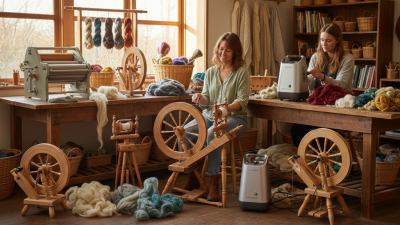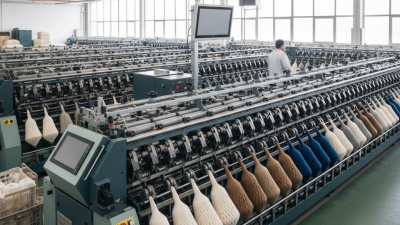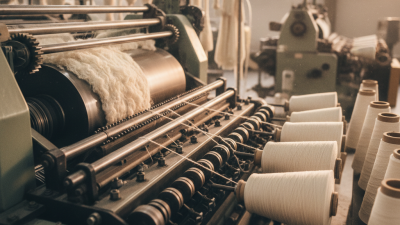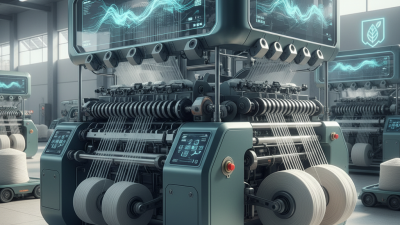
Choosing a spinning wool into yarn machine requires more than comparing price tags or advertised speed. Wool behaves differently from cotton, acrylic, and blended fibers. Its micron diameter, staple length, crimp, moisture, and cleanliness directly affect drafting and yarn strength. A machine that handles coarse fleece may struggle with fine merino. That detail is easy to miss.
The International Wool Textile Organisation’s 2024 market information reports annual global wool production at roughly one billion kilograms. This large supply still varies greatly by breed, region, and processing quality. Textile Exchange’s Materials Market Report 2024 estimates that global fiber production reached about 124 million tonnes in 2023. Wool remains a small, specialized fiber category, making equipment selection especially important for consistent results. These figures show market scale, but they do not choose a machine for your workshop.
A suitable spinning wool into yarn machine should match your raw material and production target. Check its adjustable drafting system, spindle speed, twist range, motor control, and compatibility with carded or combed wool. For example, a small producer may need stable low-speed spinning for 18-micron merino, while a mill may prioritize automation and continuous output. Ask suppliers for test samples, yarn count data, maintenance requirements, and energy information. ISO 2060 methods can support yarn linear-density testing after production. However, laboratory results may not reflect every operator’s technique. That is worth remembering. Real fleece can contain uneven moisture, short fibers, or vegetable matter. This guide compares practical machine features, professional specifications, and common purchasing mistakes, helping buyers make a more defensible decision.
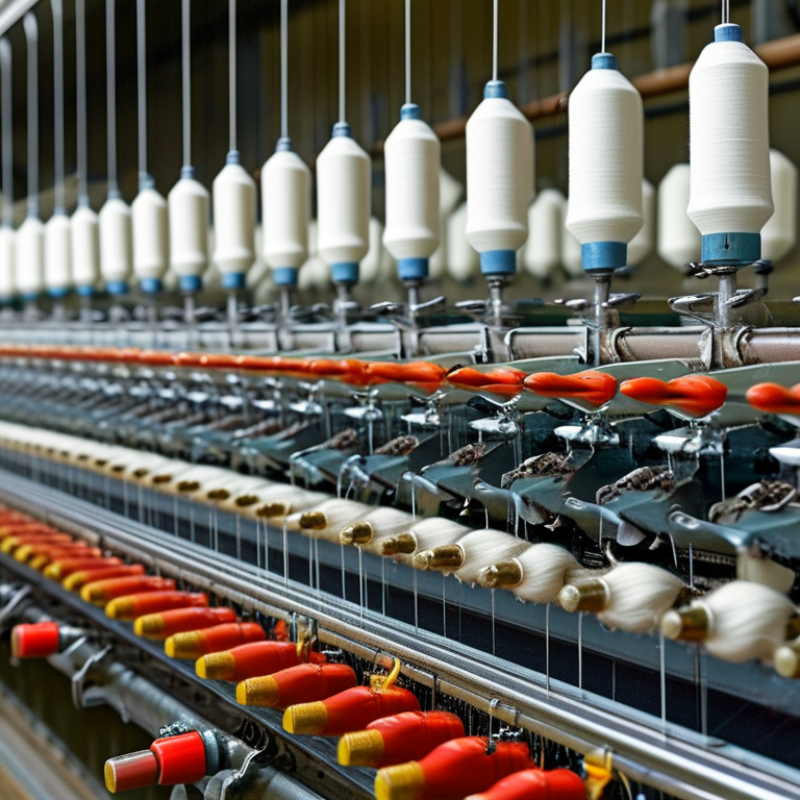
Start by defining the wool fiber before comparing machines. Fine wool between 15 and 40 microns needs gentle drafting and controlled tension. Coarser fibers can tolerate firmer handling, but excessive force may create uneven yarn. Staple length matters just as much. Wool measuring 20 to 200 mm requires different feeding, carding, and drafting settings. Short fibers may need closer control to reduce shedding. Long fibers can wrap around rollers when alignment is poor.
A practical machine choice should match the narrowest part of your fiber range. Check adjustable roller spacing, drafting ratios, spindle speed, and fiber feed stability. Ask for test spinning with your actual wool. Small differences in crimp, moisture, and grease can change the result. Clean fiber is not always perfectly consistent. That is where careful observation becomes important. I would record yarn thickness, breaks, twist response, and surface softness during each trial.
Tips: Sort wool by micron and staple length before processing. Keep samples in labeled bags. Start at a low speed. Increase tension gradually. Watch the drafting zone closely. If short fibers escape, reduce the drafting distance or feed speed. If long fibers bunch, improve alignment before increasing power. A machine may perform well in a demonstration, yet disappoint with variable fleece. That detail is easy to underestimate.
How to Choose a Spinning Wool Into Yarn Machine?
Tex measures yarn mass per 1,000 meters. Lower tex produces finer yarn, while higher tex creates a heavier yarn. For 10–30 tex, choose a machine with precise drafting, stable tension, and fine spindle control. These settings help prevent uneven places and frequent breaks. For 40–100 tex, a stronger drafting system and larger bobbin capacity are often more practical. Coarser yarn needs adequate twist control and firm winding.
Match the machine type to the wool process. Worsted spinning usually suits finer, smoother yarns because it aligns fibers closely. Woolen spinning can handle shorter fibers and produce a softer, bulkier structure. Capacity means more than spindle quantity. Calculate expected output from spindle count, delivery speed, yarn tex, and realistic efficiency. A machine with 1,000 spindles may underperform if the actual running rate remains low. Check spindle spacing, bobbin size, motor control, and automatic end-break detection.
Test before purchasing. I once focused too heavily on spindle numbers and underestimated cleaning time. The production estimate looked excellent on paper. It was not. Run representative wool for several hours, then inspect yarn evenness, strength, hairiness, and package build. Ask for measured trial data, not only catalog figures. Also examine operator access and replacement-part availability. A smaller machine may be wiser for 10–30 tex sampling, while a larger system suits steady 60–100 tex production. Reconsider the choice if the machine cannot maintain stable tension during speed changes.
| Target Yarn Count | Approx. Metric Count | Typical Yarn Use | Suitable Machine Type | Recommended Spindle Capacity | Key Machine Features | Selection Considerations |
|---|---|---|---|---|---|---|
| 10–15 tex | Nm 100–67 | Fine knitting yarn, lightweight apparel, lace-weight wool blends | Fine-gauge worsted or compact ring-spinning frame | 600–1,200 spindles for pilot or specialty production | Precise drafting, stable roving feed, high-quality travellers, and accurate spindle monitoring | Requires well-prepared, long and uniform fibres. Control hairiness and yarn breaks carefully. |
| 15–25 tex | Nm 67–40 | Fine sweaters, socks, woven apparel, and lightweight fabrics | Worsted ring or compact spinning machine | 600–1,800 spindles | Adjustable drafting system, controlled twist, automatic doffing option, and pneumatic waste removal | Compact spinning can improve fibre control and reduce hairiness, especially with fine wool tops. |
| 25–40 tex | Nm 40–25 | General-purpose knitting yarn, fine blankets, and medium-weight garments | Worsted ring-spinning frame; semi-worsted frame for shorter or blended fibres | 1,200–2,400 spindles | Moderate drafting range, flexible twist settings, reliable roving creel, and electronic yarn clearing | A versatile range for wool and wool blends. Choose fibre-preparation equipment according to staple length. |
| 40–60 tex | Nm 25–17 | Hand-knitting yarn, sweaters, scarves, and medium-weight woven fabrics | Semi-worsted ring spinning or woollen spinning frame | 1,200–2,400 spindles | Lower drafting stress, robust spindle assembly, adjustable balloon control, and medium-count roving capability | Woollen spinning gives a softer, bulkier yarn; semi-worsted spinning generally gives better strength and definition. |
| 60–80 tex | Nm 17–12.5 | Bulky knitwear, outerwear, blankets, upholstery, and craft yarn | Woollen ring-spinning machine or coarse semi-worsted frame | 600–1,800 spindles | Large roving package, low-to-medium drafting ratio, strong spindle components, and generous package build | Prioritize yarn bulk and softness over maximum spindle speed. Check compatibility with thick travellers and tubes. |
| 80–100 tex | Nm 12.5–10 | Heavy knitwear, carpets, rugs, thick blankets, and hand-knitting yarn | Coarse woollen spinning frame or heavy-duty ring-spinning machine | 400–1,200 spindles for specialty or low-volume production | Large-diameter spindle package, low-speed operation, high-torque drive, and reinforced drafting components | Use a machine designed for coarse counts; a fine-yarn frame may not provide adequate torque or package capacity. |
Planning note: Metric count is estimated from the relationship Nm ≈ 1,000 ÷ tex. The spindle capacities shown are practical planning ranges rather than fixed standards. Final selection should also consider fibre staple length, wool preparation system, blend composition, twist multiplier, desired production volume, machine speed, package size, and the required level of automation.
Choosing a wool-to-yarn spinning machine requires more than chasing the highest RPM. A 5,000 RPM setting often gives better control for delicate wool, especially when fibers vary in length. At 20,000 RPM, production can rise sharply, but heat, fiber breakage, and uneven tension may also increase. Fast is not always better.
Twist changes the yarn’s behavior. Lower twist can create a softer, fuller yarn for scarves and knitwear. Higher twist improves strength and surface stability, but may make the yarn feel harder. ISO 2060 supports checking linear density, while ASTM D1423 provides a recognized method for measuring twist. Record twist per meter, spindle speed, and yarn breaks during each trial. Small details matter.
Output should be measured in kilograms per hour, not RPM alone. Textile Exchange’s 2024 Materials Market Report estimates global fiber production at about 124 million tonnes in 2023, showing the pressure for efficient processing. However, wool remains a specialized fiber, and its natural variation complicates direct comparisons. ITMF’s 2024 machinery statistics also separate spinning technologies, reinforcing the need to compare like with like. I would test 5,000, 10,000, and 20,000 RPM using the same wool batch. The middle setting may win. Maybe.
How to Choose a Spinning Wool Into Yarn Machine?
Drafting quality should lead the evaluation. A machine must stretch wool fibers evenly, without creating thin patches or excessive slubs. Check drafting ratios, roller spacing, and adjustment accuracy. Test the same wool lot at three settings. Measure yarn count, unevenness, breakage, and waste. A smooth sample can still hide weak sections. That matters during weaving.
Motor power is not the same as energy efficiency. A large motor may handle dense wool, but it can consume unnecessary electricity during idle periods. UNIDO textile energy-efficiency guidance and published mill audits often use 2–4 kWh per kilogram of yarn as a practical screening range. Treat it carefully, not as a guarantee. Record input electricity with a power meter, then divide it by saleable yarn kilograms. Include startup, cleaning, and rejected yarn. Small machines often look efficient until idle time is counted.
The Textile Exchange Materials Market Report 2024 places global fiber production near 124 million tonnes in 2023, while wool remained close to one million tonnes. Wool is a smaller stream, so avoidable waste has a visible cost. Choose variable-speed control, efficient transmission, and a motor sized for your actual throughput. Ask for energy data under load, not only nameplate ratings. My first comparison would favor the lowest kWh/kg, but that choice could fail if drafting stability is poor. Consistent yarn still deserves priority.
Comparison of drafting rate, motor power, and electrical energy use across representative machine classes.
A faster drafting rate can increase production, but motor power alone does not determine efficiency. For selection, compare usable yarn output with energy consumption per kilogram. The figures shown are representative non-brand operating benchmarks at stable production conditions; actual results vary with wool fineness, yarn count, twist, moisture, and operator settings.
A wool-spinning machine should meet an 80–95% efficiency target under defined operating conditions. Do not treat this range as guaranteed output. Measure actual availability, speed, and yarn quality separately. The International Textile Machinery Federation reported about 8.61 million short-staple spindles shipped in 2023, despite a year-on-year decline. This suggests careful investment matters more than simply buying newer equipment.
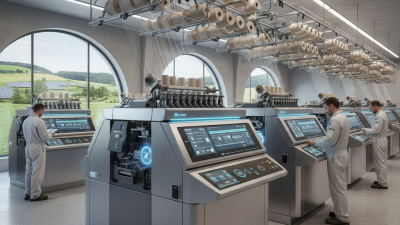
Automation should include yarn-break detection, automatic doffing, tension monitoring, and clear production data. The International Federation of Robotics recorded 553,052 industrial robots installed worldwide in 2022. However, automation does not remove operator responsibility. Ask whether staff can adjust settings without bypassing guards.
Check emergency stops, interlocks, exposed belts, and access doors against ISO 12100 risk-assessment principles. Small gaps become serious hazards.
Maintenance evidence is equally important. Request service intervals, lubrication points, spare-part lead times, and fault-history records. A clean sensor window can prevent false stoppages. A worn drafting roller can quietly damage consistency. Use planned maintenance, but review it when real failures disagree. An impressive dashboard may show 92% efficiency while hiding rejected cones, slow restarts, or manual corrections. I would test wool from several batches, record stoppage minutes, and compare measured output with the supplier’s rated capacity before purchase.