Top Floor Drain Suppliers for Global Buyers
Choosing the right Floor Drain supplier affects hygiene, installation speed, and long-term building performance. Global buyers often compare factories across price, materials, certifications, drainage capacity, and delivery reliability. A low quotation may look attractive, yet it can hide thin stainless steel, weak welding, or inconsistent dimensions.
Experienced buyers inspect more than product photographs. They request material grades, technical drawings, load ratings, surface finishes, and test documentation. They also ask how each supplier manages sampling, quality control, packaging, and replacement claims. A dependable manufacturer should explain production steps clearly, from stamping and welding to polishing and final inspection. Small details matter. A secure grate, accurate outlet size, and removable strainer can reduce maintenance problems on real construction sites.
This guide introduces leading Floor Drain suppliers for international projects, including manufacturers serving residential, commercial, hospitality, and industrial applications. It considers product range, customization ability, production experience, communication, and export support. Supplier performance may vary by project, region, and order volume. No ranking is perfect. Buyers should verify current certificates, factory capabilities, lead times, and local installation requirements before signing contracts. A factory visit or independent inspection can reveal more than a polished catalog. Careful comparison remains essential, especially when one supplier promises everything.
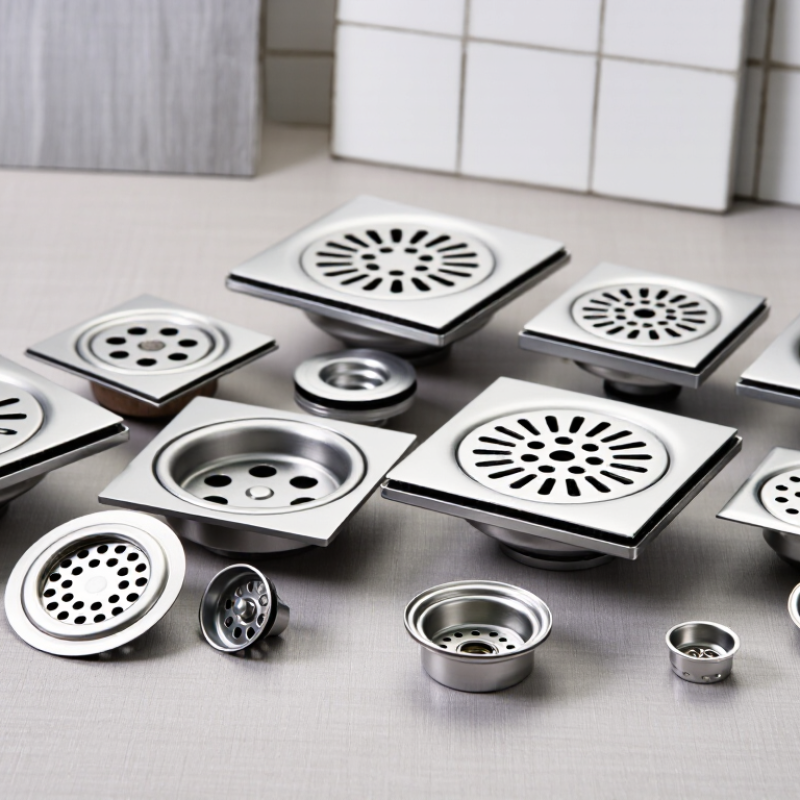
Global Floor Drain Market Scope: Growth Rates, Demand, and Key Regions
The global floor drain market is expanding steadily as cities add housing, hotels, hospitals, and industrial facilities. Market assessments commonly indicate mid-single-digit annual growth, although estimates vary by methodology. That difference matters. Demand is also shifting toward low-profile designs, odor control, stronger sealing, and easier maintenance. Buyers increasingly expect documented performance, not attractive packaging alone.
Asia-Pacific leads market volume because of rapid construction and dense urban development. North America shows strong replacement demand, especially in aging commercial buildings. European projects often prioritize water efficiency, accessibility, and strict building requirements. The Middle East is creating demand for corrosion-resistant drainage in large developments and dry, dusty environments. Regional growth is uneven, and future forecasts may prove too optimistic.
Experienced buyers should check flow capacity, trap-seal performance, material thickness, surface finish, and installation depth. A drain must fit the tile system and the actual floor slope. Small errors can cause standing water near a shower entrance. Suppliers should provide test records, dimensional drawings, quality controls, and realistic delivery schedules. Certifications help, but they do not replace site testing.
Tips: Compare total cost over three years, not only the purchase price. Request samples and inspect threads, grates, and seals. Ask how the supplier handles damaged deliveries and inconsistent batches. Reflection is useful: the cheapest option may create higher cleaning and replacement costs.
Top Floor Drain Suppliers for Global Buyers
Global Floor Drain Market Scope: Growth Rates, Demand, and Key Regions
Asia-Pacific represents the largest estimated share of global floor drain demand and is expected to record the fastest regional growth, supported by urbanization, residential construction, commercial development, and drainage-system upgrades. Europe and North America remain important mature markets with steady replacement and renovation demand.
Data note: Regional demand shares and growth rates are rounded market estimates synthesized from publicly reported construction, plumbing, and drainage-market outlooks; they are intended for comparative visualization rather than financial forecasting.
Supplier Evaluation Using EN 1253, ASME A112.6.3, and ISO 9001
Global floor drain sourcing should begin with evidence, not catalogue photos. EN 1253 checks drainage performance, load resistance, odor seals, and safe water discharge. Ask suppliers for test reports matching the exact grate, outlet, and trap configuration. ASME A112.6.3 adds practical requirements for drainage fixtures, including outlet design and installation conditions. A small mismatch can cause leaks beneath tiled floors.
ISO 9001 confirms a documented quality system, but it does not guarantee every drain is flawless. The ISO Survey 2022 recorded 1,265,216 ISO 9001 certificates worldwide, showing broad adoption, not automatic product quality. Request batch records, inspection plans, corrective-action logs, and samples from current production.
The UN World Urbanization Prospects reports that 56% of the world’s population lived in urban areas in 2021. Higher density makes reliable drainage more important, especially in hotels, apartments, and public facilities. Still, certification alone is not enough.
Tips: Compare EN 1253 and ASME A112.6.3 test evidence line by line. Check flow capacity under realistic water depth. Inspect the sealing ring and grate finish by hand. Confirm corrosion testing for wet or coastal sites. I would also request an installation drawing before ordering; this step is often skipped, and that mistake can become expensive.
Material, Flow-Rate, and Water-Seal Criteria for Global Buyers
Global buyers should evaluate floor drain suppliers through three practical criteria: material, flow rate, and water-seal performance. Material selection depends on location and cleaning conditions. Stainless steel suits wet commercial areas and resists visible corrosion. ABS can reduce cost in suitable indoor installations. However, low price may hide weaker grates or brittle threads. Ask for material grades, thickness, surface treatment, and inspection records.
Flow rate must match the drainage system, not just the drain opening. Request test data in litres per minute, including the water head used. A drain showing 60 litres per minute under one test condition may perform differently on site. Water-seal depth also matters. A deeper seal can reduce sewer odours, but it may slow drainage when debris builds up. Confirm the seal depth, removable core design, and cleaning access. Small details matter.
Tips: Compare like with like. Check flow-rate test conditions, material certificates, and seal dimensions. Request samples when possible. Pour water through the sample. Then inspect the grate, threads, and gasket by hand. Packaging and installation instructions should be reviewed too. I have seen precise specifications fail to mention tolerances, which creates avoidable fitting problems. Suppliers should explain those gaps clearly, even when the answer is inconvenient.
Procurement, Compliance, MOQ, Lead Time, and Supplier Verification
Top Floor Drain Suppliers for Global Buyers
Reliable procurement starts with a clear technical brief. Specify drain size, outlet diameter, grate load rating, surface finish, and installation depth. Stainless steel grades should match the project environment, especially in coastal or chemical-exposed areas. Ask for material certificates, dimensional drawings, and water-flow test records before approval. Compliance is not one universal checklist. Confirm destination-market requirements for plumbing, packaging, labeling, and product safety.
MOQ can change the real purchase cost. A low MOQ may still create expensive freight per unit. Request pricing at several quantities, including trial orders and repeat volumes. Confirm whether custom grates, finishes, or packaging increase the MOQ. Lead time should include sampling, production, inspection, and port handling. Keep buffer days. Delays happen, even with careful planning.
Tips: Ask suppliers to show factory photos, live production evidence, and recent inspection reports. Order a sample and check welding, odor-trap fit, drainage speed, and carton protection. Verify company registration, export experience, payment details, and customer references independently. A video call is useful, but it is not full proof. One common mistake is trusting polished certificates without matching them to the actual factory and product. I would also record every agreed detail in a purchase specification, because small changes are easily forgotten.