
Leather Leggings are no longer one sharply defined trend. In 2026, the category spans sleek second-skin styles, relaxed straight-leg cuts, flared silhouettes, and practical lined designs. Each creates a different impression. A glossy pair catches light under shop displays; a matte finish looks quieter with a long knit. Small details matter, too: waistband height, seam placement, stretch recovery, and whether the fabric feels cool or softly brushed against the skin. The right choice depends on fit, comfort, and where you plan to wear them—not just the latest photograph.
Fashion editor Diana Vreeland’s well-known line, “The eye has to travel,” offers a useful styling lens here. It was not written specifically about leather leggings, so it should not be presented as a product endorsement. Still, it helps explain why cut and finish change an outfit’s balance. A flared pair can lengthen the leg beneath a cropped jacket; a slim matte pair may sit more easily beneath an oversized coat. There is no single winner. And, honestly, trend lists can oversimplify fit: two pairs with the same label may feel very different after an hour of walking. This guide compares the leading types of Leather Leggings in 2026, including their silhouettes, finishes, comfort considerations, and best styling uses. It also looks at practical buying details, so readers can judge more than appearance alone.
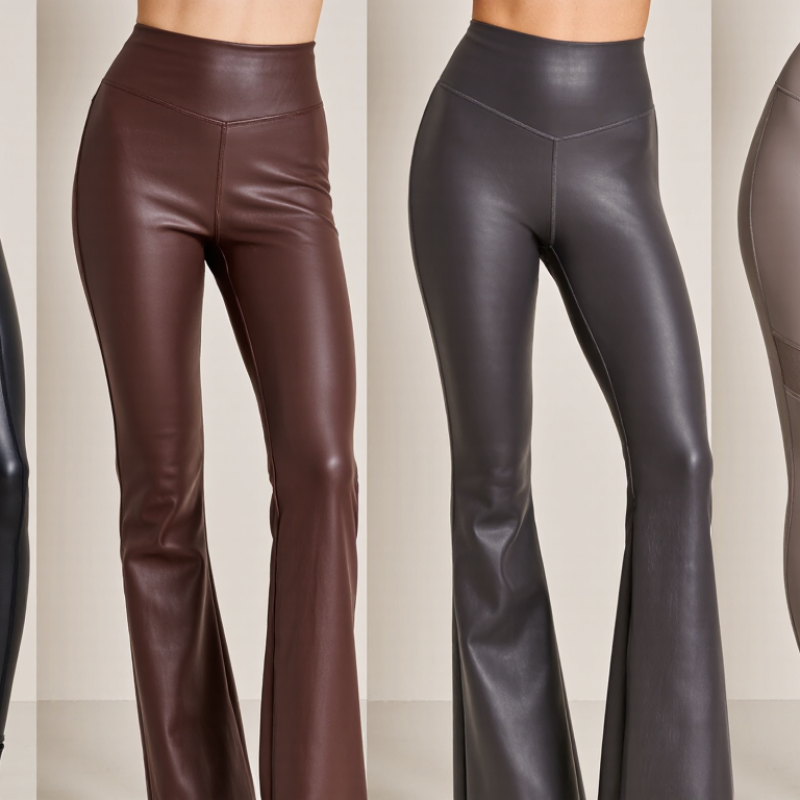
In 2026, leather leggings are best classified by material, surface finish, construction, and fit—not appearance alone. Genuine leather is made from animal hide; faux leather usually has a textile backing and a coated surface. Some products contain recycled or plant-derived materials, but blends differ. Check the label. “Vegan” alone says little about stretch, wear, or care.
Surface finishes create another useful distinction. Matte styles look understated, while polished finishes reflect more light. Suede-effect and embossed surfaces add texture, though they may need gentler cleaning. Construction matters, too: some leggings use leather throughout, while others combine leather panels with stretch fabric. These categories overlap. It can be confusing, especially when product descriptions use “leather” loosely.
Fit provides a practical final classification. High-rise cuts sit above the waist and can feel secure; mid-rise styles offer a less covered feel. Slim, close-fitting designs emphasize a smooth outline, while panelled cuts may allow easier movement at the knees. Check seams and fabric recovery before choosing. A pair that looks sleek on a hanger may feel restrictive when sitting. Small detail, big difference. Care instructions and a brief try-on can reveal more than a product photo.
Genuine leather leggings begin with the hide, and its thickness affects comfort, drape, and durability. Lambskin feels supple and light, with a smooth surface that moves easily. Cowhide is usually firmer and more substantial, though quality varies between hides. Very soft. Natural grain may show small marks or uneven texture; these are not always defects.
Finishes change both appearance and feel. An aniline finish keeps the hide’s natural character visible but can show water spots more readily. A pigmented finish adds a more even color and may offer better resistance to everyday scuffs. Matte leather looks understated, while a subtle sheen can emphasize creases at the knees. Check care instructions before cleaning, since harsh products may alter the finish.
Construction matters just as much as leather choice. Look for smooth seams that do not press sharply against the skin, plus a secure waistband that stays in place when sitting. Because leather has limited stretch, some designs use elastic panels or a stretch-fabric lining for easier movement. Check the knee and seat areas for tight pulling when you bend. A fit that feels perfect while standing may feel restrictive later; that detail is easy to overlook.
Typical apparel-leather thickness ranges by material
Lambskin is often chosen for its soft, lightweight feel; goatskin is known for its supple strength; and cowhide is generally thicker and more structured. Nappa and suede describe finishes, while stretch panels and seam placement affect fit and movement. Thickness varies by hide, tannery, and garment construction, so these ranges are illustrative.
Faux-leather leggings can look similar on a hanger, yet their materials feel different against the skin. PU, or polyurethane, is commonly used for a softer, more flexible finish. It often bends comfortably at the knees and may feel less stiff during a long walk. Check the fabric label, though; a smooth surface does not guarantee good stretch or breathability. Fit matters, too.
PVC leggings can have a glossy, structured look and may feel firmer than PU styles. That shine has a trade-off. The material can feel warm during extended wear, especially in a crowded room or under a coat. Inspect seams and waistbands for flexibility, since tight construction can restrict movement. A polished appearance is not always a practical one.
Plant-based faux leather may use materials derived partly from sources such as apple waste, cactus, or plant oils. The exact composition varies, and many products combine plant-derived ingredients with synthetic binders. Plant-based does not automatically mean plastic-free or compostable. Read the care instructions and material details before buying; vague labels deserve a closer look. I would not choose by the “eco” wording alone. The finish, lining, and durability matter just as much.
| Comparison factor | PU faux-leather leggings | PVC faux-leather leggings | Plant-based or bio-based faux-leather leggings |
|---|---|---|---|
| Typical construction | A polyurethane (PU) coating or film is applied to a textile backing, commonly a stretch knit used for leggings. | A polyvinyl chloride (PVC) coating is applied to a textile backing. The backing supplies much of the garment’s stretch. | Usually a textile backing with a coating that contains some plant-derived feedstock, such as material from agricultural oils or residues. Many products also contain PU or other polymers. |
| Look and feel | Often made with a smooth, soft hand and a matte, satin, or lightly glossy finish, depending on the surface treatment. | Can have a pronounced glossy finish and a firmer, more plastic-like hand, although finishes vary. | Varies by coating and backing. Some are designed to resemble conventional PU faux leather; texture and softness are not uniform across products. |
| Stretch and fit | Stretch generally comes from the knit backing, often containing elastane, rather than from the PU coating itself. Fit depends on the fabric blend and pattern. | Stretch also generally comes from the backing. A heavier or less flexible coating may feel stiffer when the leggings bend or move. | Depends on the backing and coating formulation. Check the garment’s fiber content and fit details rather than assuming all plant-based versions stretch alike. |
| Breathability and comfort | The coated surface is less breathable than an uncoated knit. Comfort can vary with coating thickness, lining, fit, and temperature. | The coated surface is generally not very breathable and may feel warm during prolonged wear or exercise. | Breathability depends on the complete construction. A plant-derived ingredient does not by itself make a coated fabric more breathable. |
| Water resistance | The coated face can resist light moisture, but seams, wear, and construction affect how much water the garment can withstand. | The coated face is typically resistant to water, but leggings are not automatically waterproof because seams and other parts can admit moisture. | Varies with the coating and finish. Verify care and performance claims for the specific fabric. |
| Wear and maintenance | Repeated stretching, abrasion, heat, and unsuitable washing can damage or peel a coating. Follow the garment’s care label; many styles call for gentle washing or wiping. | Can resist moisture but may become stiff or crack with age, heat, or repeated flexing. Follow the care label and avoid high heat unless explicitly permitted. | Durability and care vary considerably by formulation. Plant-derived content alone does not indicate resistance to cracking, peeling, or washing. |
| Environmental considerations | PU is a synthetic polymer. Environmental impact depends on feedstocks, manufacturing, product life, and end-of-life options; coated textile blends can be difficult to recycle. | PVC is a chlorine-containing plastic. Its production and disposal have distinct environmental and chemical-management considerations; additives and manufacturing processes vary. | “Plant-based” or “bio-based” usually describes the origin of some feedstock, not necessarily the entire garment. The coating may still include fossil-based polymers, and bio-based content does not automatically mean biodegradable or recyclable. |
| What to check before buying | Look for the backing fiber blend, coating description, care instructions, and information about the finish and expected use. | Check the backing composition, coating details, care instructions, and whether the garment feels flexible enough for your intended movement. | Look for the percentage and source of bio-based content, the full coating composition, backing fibers, durability information, and specific end-of-life claims. |
| A practical choice for | Shoppers seeking a widely used faux-leather finish with a range of textures and styles. | Shoppers seeking a distinctive glossy look and who are comfortable with a potentially firmer, less breathable feel. | Shoppers interested in alternatives that use some renewable feedstock and are willing to compare detailed material disclosures. |
Note: These are general material tendencies, not guaranteed performance ratings. Formulations, fabric weights, finishes, and garment construction vary by product; check the item’s label and care instructions.
High-rise leather-look leggings remain a practical choice for everyday outfits. Their waistband sits above the hips and can feel secure under a tucked-in shirt or cropped jacket. Check the waistband while seated; a firm fit can still roll or pinch.
Seamless designs create a smoother outline beneath fitted tops, with fewer visible stitch lines. But “seamless” does not guarantee comfort. Look for stretch that recovers after movement and fabric that stays opaque when stretched.
Moto styles use stitched panels, curved seams, or subtle quilted details to suggest riding gear. These features add visual texture, but thick seams may feel stiff at the knees.
Fleece-lined leggings suit cold commutes and outdoor errands. The soft interior adds warmth, though it can make the garment less breathable during brisk activity. Small trade-offs matter.
Textile Exchange’s Materials Market Report 2024 estimates that global fiber production reached 124 million tonnes in 2023, with polyester accounting for about 57 percent. This broad industry figure does not measure leather-legging sales or prove that one design performs better. It does offer useful context: many leather-look styles rely on stretch textile bases, so check the fiber content, coating, and care instructions rather than judging by shine alone. A little less gloss may wear better.
Leather leggings vary in construction, and the right type depends on how they feel and where you wear them. Stretch fabric with a leather-like coating often moves easily and suits daily errands. Genuine leather can feel more structured, while lined versions add warmth but may become uncomfortable indoors. A high-rise waist can stay put when sitting, but a tight waistband may dig in after lunch. Fit is personal. Check the knees and hips while seated; shiny fabric that pulls sharply may signal a poor fit or a fragile coating.
Climate changes the choice. In warm weather, lightweight, unlined leggings usually feel less restrictive, though dark surfaces can heat up in direct sun. For cold commutes, a soft lining helps, but bulky layers underneath can limit movement. Care matters, too. Coated styles often need gentle wiping and air-drying; heat from a dryer can damage their finish. Genuine leather may require material-specific care, so check the garment label rather than guessing. Use matters. For walking or travel, prioritize flexible panels and a waistband that stays comfortable for hours. For exercise, many leather-look styles trap heat and may not handle repeated stretching well. One honest limitation: a quick try-on cannot show how a coating will age after months of wear. That uncertainty is real.