Choosing the right yarn spinning equipment can shape a mill’s quality, energy use, and daily output. The decision is rarely about buying the fastest machine. It is about matching technology with fibre type, yarn count, production volume, and operator skill.
Rieter CEO Norbert Klapper has described digitalization as “a key driver for the future of spinning.” That view matters on the factory floor. A modern system may track spindle speed, detect yarn breaks, and show maintenance warnings before a small fault becomes costly. However, digital features should not replace practical judgment. A simple, stable machine can outperform a complex system when technicians lack training or spare parts.
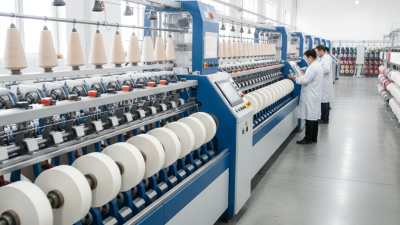
This guide examines the main types of yarn spinning equipment, including blow-room lines, carding machines, drawing frames, roving frames, ring-spinning machines, open-end systems, and air-jet technology. It considers fibre preparation, production targets, automation, power consumption, compatibility, and after-sales support. A buyer should inspect more than catalog specifications. Ask for trial results using your actual cotton, wool, or blended fibre. Check yarn evenness, strength, hairiness, waste, and noise levels.
Small details matter. A poorly aligned drafting unit can create uneven yarn. An unreliable sensor can stop an entire shift. The cheapest quotation may become expensive later.
There is no perfect equipment choice. Needs change with markets, labour, and raw-material quality. Careful testing remains wiser than confident promises.
Choosing spinning equipment starts with the yarn, not the machine catalogue. Define fiber type, blend ratio, count range, twist, strength, hairiness, and end-use. Knitting yarn may prioritize evenness and softness. Weaving yarn may require greater tensile stability. Record target output per shift and acceptable waste. Small details matter.
Textile Exchange’s Materials Market Report 2024 estimates 124 million tonnes of global fiber production in 2023. It projects nearly 160 million tonnes by 2030. This growth increases pressure to process recycled and blended fibers consistently. Test the actual feedstock before selecting a production line. Laboratory cotton is not production cotton. Test it first.
Production goals determine the process route. Ring spinning suits fine, strong yarns. Open-end systems can support simpler, higher-throughput applications. Air-jet systems may reduce some downstream handling, but they demand disciplined fiber preparation. ITMF’s International Textile Machinery Shipments Statistics 2023 reported approximately 8.61 million new short-staple spindles shipped worldwide. That figure shows strong investment, not automatic suitability. Compare total cost per kilogram, including power, compressed air, labor, maintenance, floor space, and changeover time. Measure energy and quality during a pilot run. Keep samples from every shift.
Ask for trial data using your fiber, count, and twist. Require clear tolerances. Inspect cleaning access and sensor calibration. Forecasts are imperfect. Leave capacity flexibility instead of buying maximum output. A cheaper line can become expensive when defects, downtime, or mixed-fiber contamination increase. Recheck the decision after three months of real production.
Choosing spinning equipment starts with the yarn’s structure, not the machine’s headline speed. Ring spinning suits fine, strong yarns with a soft handle and flexible twist control. Open-end spinning handles coarser counts efficiently and tolerates shorter fibers. Air-jet spinning can produce smooth, low-hairiness yarns at high output, although its compressed-air demand deserves close attention.
Fiber mix changes the decision. Textile Exchange’s 2024 Materials Market Report estimated global fiber production at 124 million tonnes in 2023. Polyester represented about 57%, while cotton accounted for roughly 22%. Polyester-rich blends often need precise drafting and static control. Cotton, recycled fibers, and longer natural fibers may require different opening, cleaning, and carding settings. Recycled inputs are especially variable. They can increase waste and reduce yarn strength if equipment settings remain unchanged.
Small details matter. Check spindle or rotor speed, draft range, twist accuracy, energy use, and waste percentage under real production conditions. ITMF’s International Textile Machinery Shipment Statistics 2023 recorded millions of new short-staple spindles and open-end rotors shipped worldwide, showing continued investment in both technologies. However, shipment volume does not prove suitability. I would test the actual fiber lot, not a laboratory substitute. The best choice may be slower. That can be wiser. A machine producing fewer defects, steadier strength, and less waste may deliver better economics than a faster line. My own caution is simple: equipment comparisons often overlook operator skill, maintenance discipline, and humidity control. Those “small” factors can reshape the final yarn.
How to Choose the Best Yarn Spinning Equipment?
Choosing yarn spinning equipment requires more than comparing purchase prices. In production trials, I have seen efficient machines fail when their output did not match the mill’s preparation process. Evaluate spindle speed, drafting stability, energy use, and stoppage frequency under real operating conditions. Ask for performance data using fibers similar to yours. A machine may perform well in a showroom but behave differently beside dusty carding equipment. Record actual output per hour, not only the supplier’s rated capacity. Small delays can reduce daily production significantly.
Tips: Test the equipment with your intended fiber blend. Check yarn evenness, tensile strength, hairiness, and breakage rates. Inspect samples under consistent lighting. Measure noise and vibration during a full shift. Compare results after cleaning, because neglected maintenance reveals practical weaknesses.
Product quality should guide every capacity decision. Higher speed is not useful if it increases thin places, neps, or frequent end breaks. Review laboratory reports and confirm testing methods before trusting the numbers. Reliable evaluation includes repeated trials, operator feedback, and maintenance records. Leave room for future capacity, but avoid buying oversized equipment without trained staff or stable power. That choice can become expensive. I would also question unusually perfect trial results. Real production includes humidity changes, skill differences, and imperfect raw material. A careful decision accepts these variables and tests them openly.
How to Choose the Best Yarn Spinning Equipment?
Choosing yarn spinning equipment is less about maximum output and more about daily control. During plant evaluations, I watch how operators load packages, adjust settings, and respond to alarms. Small delays often reveal larger design problems. Automation should reduce repetitive work without hiding important decisions. Look for clear dashboards, recipe controls, sensor feedback, and manual access during unusual yarn behavior. An automatic system can be impressive, yet confusing screens may slow a new operator. Ask for a live demonstration, not only a specification sheet. Measure changeover time, training hours, and error recovery.
Maintenance requirements deserve the same attention as production speed. Inspect spindle access, lubrication points, filter placement, and the time needed to replace common parts. Operators should reach service areas safely, with tools visible and instructions nearby. Record expected cleaning intervals and compare them with your staffing pattern. If a machine needs daily attention, a small team may struggle. That detail is easy to miss. Ask whether alarms identify causes or merely announce failures. Useful records include vibration readings, stoppage reasons, and repair duration. These records support reliable decisions over time.
Operator requirements also depend on yarn type, shift length, and local experience. A simple interface helps, but practical training remains essential. Use trial shifts to test threading, tension changes, cleaning, and fault recovery. Watch a less experienced worker perform these tasks. Do not judge only the fastest technician. I once underestimated training time because the controls looked intuitive. That mistake affected output during the first weeks. Confirm guarding, electrical access, and emergency controls meet applicable local requirements. Leave room for human judgment when material quality changes.
How to Choose the Best Yarn Spinning Equipment?
Choosing spinning equipment is a life-cycle decision, not a shopping contest. Purchase price is visible. Energy, maintenance, downtime, and quality losses are quieter costs. The IEA’s Energy Efficiency 2023 report places industry near 37% of global final energy demand. That makes efficiency a financial issue, not only an environmental one. Measure kWh per kilogram for each yarn count, shift, and product blend. Do not trust one factory average.
The U.S. Department of Energy reports that motor-driven systems consume about 23% of American electricity and over 70% of industrial electricity. Spindles, drafting motors, fans, and compressors deserve separate checks. Compare quoted efficiency with actual load performance. Ask for test conditions, spare-part prices, training requirements, and expected service intervals. A cheaper machine may lose its advantage through unstable yarn quality or frequent stoppages. However, high-efficiency equipment is not automatically the best choice. Its payback depends on operating hours, electricity tariffs, product mix, and financing costs. Some estimates will be wrong. Review them quarterly.
Tips: Build a five-year ownership model. Include electricity, labor, waste, repairs, downtime, and resale value. Log vibration, bearing temperature, and kWh per kilogram after installation. The ITMF International Textile Machinery Shipment Statistics shows investment cycles can shift sharply, so avoid buying capacity for optimistic demand alone. Leave room for maintenance access. A perfect spreadsheet cannot replace a mill trial.
| Equipment Type | Typical Application | Indicative Installed Capacity | Indicative Capital Cost | Electricity Use | Typical Staffing Requirement | Expected Service Life | Annual Maintenance Budget | Key Advantages | Key Limitations | Long-Term Value |
|---|---|---|---|---|---|---|---|---|---|---|
| Ring Spinning | Fine to medium-count yarns for apparel, home textiles, and high-quality woven fabrics | Approximately 2,500–4,000 kg/day per 10,000 spindles | USD 1.8–3.0 million per 10,000-spindle line | 1.4–2.0 kWh/kg of yarn | 12–18 operators per shift | 15–20 years with planned refurbishment | 3–5% of equipment value | High yarn quality, broad count range, strong flexibility, and mature process technology | Higher labor demand, more frequent end-down intervention, and greater floor-space requirements | Strong long-term value when yarn quality and product flexibility are priorities |
| Compact Ring Spinning | Premium apparel yarns requiring lower hairiness, improved strength, and a cleaner surface | Approximately 2,300–3,700 kg/day per 10,000 spindles | USD 2.1–3.4 million per 10,000-spindle line | 1.5–2.1 kWh/kg of yarn | 12–18 operators per shift | 15–20 years with planned refurbishment | 3–5% of equipment value | Better yarn strength and evenness, reduced hairiness, and potential downstream weaving benefits | Higher initial investment and additional compacting-system maintenance | High value for premium yarns where quality premiums offset the extra capital cost |
| Open-End Rotor Spinning | Medium to coarse-count yarns, denim, towels, knitted fabrics, and recycled-fiber blends | Approximately 1,500–2,500 kg/day per 1,200 rotors | USD 1.3–2.3 million per 1,200-rotor line | 1.0–1.5 kWh/kg of yarn | 6–10 operators per shift | 12–18 years with planned refurbishment | 3–5% of equipment value | Lower labor requirement, high automation potential, good productivity, and suitability for shorter fibers | Limited suitability for very fine counts and certain premium yarn constructions | Very strong value for high-volume, medium-count production and labor-constrained plants |
| Air-Jet Spinning | Medium-count yarns for knitting and weaving where low hairiness and high production speed are important | Approximately 1,000–1,800 kg/day per 800 spinning positions | USD 1.5–2.7 million per 800-position line | 2.0–3.0 kWh/kg of yarn | 5–8 operators per shift | 12–18 years with planned refurbishment | 3–5% of equipment value | High productivity, low hairiness, reduced end breaks, and relatively low labor requirements | Compressed-air demand can increase energy costs; count range and fiber suitability are more restricted | Attractive where labor savings and fast production outweigh higher electricity consumption |
| Vortex Spinning | Stable medium-count yarns for knitted garments, casualwear, and fabrics requiring low pilling | Approximately 1,200–2,000 kg/day per 800 spinning positions | USD 1.6–2.8 million per 800-position line | 1.8–2.6 kWh/kg of yarn | 5–8 operators per shift | 12–18 years with planned refurbishment | 3–5% of equipment value | Low hairiness, good resistance to pilling, high automation, and simplified downstream handling | More limited product range and higher technical dependence on precise fiber preparation | Good long-term value for standardized products with consistent demand and quality requirements |
| Planning note: Figures are indicative industry benchmark ranges for preliminary investment comparison. Actual results vary with fiber type, yarn count, machine configuration, utilization, climate control, electricity tariffs, labor costs, and installation scope. Capital costs exclude land, buildings, taxes, financing, and working capital. Energy consumption refers to spinning electricity and may not include full mill utilities such as humidification, lighting, compressed-air generation, or material handling. | ||||||||||
| Selection rule: Choose ring or compact ring equipment when yarn quality and product flexibility dominate; choose rotor equipment for efficient medium-to-coarse yarn production; and consider air-jet or vortex systems when automation, labor productivity, low hairiness, and rapid output are more important than the lowest possible electricity consumption. | ||||||||||