Top Wool Spinning Machine Manufacturers for Global Buyers
Choosing among the top wool spinning machine manufacturers is not a name-counting exercise. It is a production decision. Buyers must match machine design to fiber length, yarn count, output targets, and available maintenance support. A line handling fine merino may need different settings from one processing coarser wool. Even small differences matter.
Textile engineering professor S. M. Ishtiaque is known for work in textile technology. A buyer-focused principle consistent with that field is: “Judge a wool spinning machine by yarn consistency, serviceability, and fit with the fiber—not speed alone.” This is an editorial paraphrase, not a verified quotation. It reflects a useful discipline: compare technical specifications with trial results, spare-parts access, operator training, and documented after-sales service. Ask manufacturers how they handle fiber variation, machine adjustment, and production interruptions. Request evidence, not just promises.
Look closely at the details. How easily can operators reach drafting components? Are controls clear on a noisy factory floor? Can maintenance teams obtain replacement parts without long delays? These questions deserve direct answers. A polished brochure cannot show every weakness. Neither can a single factory visit.
This guide examines manufacturers through practical criteria for global buyers, including machine capability, customization, support, and value over time. No supplier suits every mill. The right choice depends on the wool, the yarn, and the people who will run the equipment.
How Wool Spinning Machines Work and What They Include
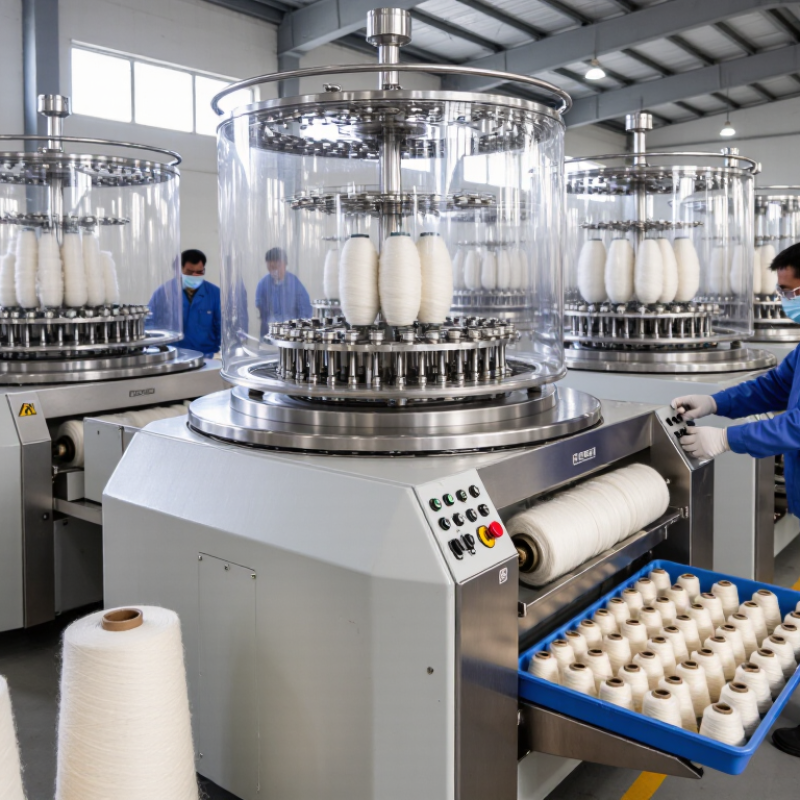
A wool spinning machine draws prepared fibers into a yarn of controlled thickness and strength. Its exact layout depends on whether the mill uses a woolen or worsted process. Carded fiber may enter as a soft web or roving, while combed fiber is usually arranged in a more parallel sliver. Preparation matters. Uneven input can cause weak spots, even when the spinning frame is well adjusted.
At the machine’s drafting zone, paired rollers move at different speeds, gently thinning the fiber bundle. A spindle or other twisting unit adds twist, helping the fibers hold together. The yarn is then wound onto a bobbin or package. Feed rollers, drafting rollers, spindles, winding parts, guards, and speed controls are common components. Sensors may monitor breaks or tension, but they cannot correct every flaw in the incoming fiber.
Operators adjust roller spacing, spindle speed, and tension to suit fiber length, yarn count, and intended use. Small changes matter. A sample yarn should be checked for thickness variation, hairiness, and break frequency before a long run. In practice, fiber behaves less neatly than a diagram suggests; humidity and batch differences can shift results. That is easy to underestimate. Regular cleaning and careful setup help, but neither replaces informed observation during production.
Top Wool Spinning Machine Manufacturers for Global Buyers - How Wool Spinning Machines Work and What They Include
A practical overview of the main equipment stages in wool yarn production. Machine layouts and specifications vary with fiber type, yarn count, production scale, and mill configuration.
| Production stage | Machine or equipment | How it works | Typical components included | Buyer considerations |
|---|---|---|---|---|
| Fiber preparation | Wool opener and blending equipment | Opens compressed or compacted fiber tufts and blends selected wool lots or other fibers into a more even feed. | Feed hopper, opening rollers, blending compartments, feed controls, and dust extraction connections. | Check fiber-handling gentleness, blend consistency, feed-rate control, dust management, and compatibility with the planned fiber mix. |
| Cleaning and opening | Wool scouring line | Washes raw wool to remove grease, dirt, and other contaminants, then rinses and dries the fiber. Scouring configuration depends on the wool and process requirements. | Feed system, wash bowls, rollers, rinse section, water and temperature controls, and a drying section. | Review water and energy use, wastewater treatment requirements, fiber loss, temperature control, and local environmental regulations. |
| Carding | Wool carding machine | Uses covered rollers and card clothing to separate and align fibers, remove some remaining impurities, and form a web or sliver. The output depends on whether the mill uses a woollen or worsted route. | Feed apron, licker-in or opening rollers, carding cylinders, worker and stripper rollers, doffer, and web or sliver delivery. | Match carding design and settings to fiber length, fineness, desired yarn route, and required sliver quality. |
| Combing (worsted route) | Wool combing machine | Separates and straightens fibers to produce a more parallel sliver and remove short fibers and residual noils. It is used in worsted processing, not every wool-spinning route. | Feed and nipper assemblies, combing elements, detaching rollers, drafting components, and sliver delivery. | Consider fiber-length suitability, noil generation, sliver regularity, maintenance access, and integration with upstream and downstream equipment. |
| Sliver preparation | Gill box or drawing frame | Combines and drafts slivers to improve fiber alignment and evenness before the next stage. Gill boxes are commonly used in worsted processing. | Sliver cans, feed rollers, drafting rollers, gill pins or aprons where applicable, and delivery coiler. | Check draft settings, sliver handling, can capacity, control of irregularity, and suitability for the selected spinning system. |
| Roving preparation | Wool roving frame | Drafts the prepared sliver and inserts a small amount of twist to create roving suitable for feeding to a ring-spinning frame. | Creel, drafting system, flyer and bobbin assembly, drive system, and package-building controls. | Confirm compatibility with the intended spinning frame, roving count range, package dimensions, and required changeover settings. |
| Yarn formation | Wool ring-spinning frame | Drafts roving into a thinner strand and inserts twist as the yarn is wound onto a package. Ring spinning is used for both woollen and worsted yarns, with different preparation and machine settings. | Creel, drafting zone, spindles, rings, travellers, winding elements, and yarn-break monitoring where fitted. | Compare spindle configuration, achievable yarn counts, speed range, yarn-break controls, energy use, and availability of replacement parts. |
| Alternative yarn formation | Wool-cap or other specialty spinning system | Uses a spinning method selected for particular woollen yarn structures or product requirements. Equipment design and process sequence differ from a standard ring-spinning line. | Fiber or roving feed, drafting or fiber-control elements, twist-forming mechanism, winding unit, and process controls specific to the system. | Request trials using the intended fiber and yarn specification; verify operator training, output package format, and access to technical support. |
| Yarn finishing | Winding and yarn clearing machine | Transfers yarn to a package suitable for downstream use. Electronic yarn clearers, when included, detect selected yarn faults and can remove defective sections. | Package holders, yarn tensioners, winding heads, splicers or knotters, yarn-clearer sensors where fitted, and package-building controls. | Specify package type, winding format, clearer settings, splice or knot requirements, and compatibility with knitting or weaving operations. |
Note: This table describes common equipment and functions rather than a single standard production line. Woollen and worsted systems use different preparation sequences, and exact specifications should be confirmed against the intended fiber, yarn, and production requirements.
Related Posts
-
How to Choose a Spinning Wool Into Yarn Machine?
-
10 Essential Tips for Using an Automatic Wool Spinning Machine Effectively?
-
2026 Top Small Wool Spinning Machine for Global Buyers?
-
Best Spinning Wool into Yarn Machine for Global Sourcing?
-
What is a Wool Spinning Machine and How Does it Work?
-
How to Spin Your Own Yarn and Create Unique Textiles at Home?