How to Choose the Best FDY Yarn Machine?
Choosing the best fdy yarn machine is a production decision, not a simple equipment purchase. It affects yarn consistency, energy use, labor safety, and long-term operating costs. A machine may promise high speed, yet perform poorly with your polymer grade or target denier. The best choice depends on your factory’s real conditions. That sounds obvious. It is often ignored.
This guide examines the factors experienced textile teams check before signing an order. These include spinning speed, godet configuration, winding accuracy, temperature control, and polyester chip compatibility. It also considers output stability during long shifts. Small details matter. A loose sensor cable, uneven cooling airflow, or difficult thread path can create repeated defects. Trial runs should use your actual raw materials, not only a supplier’s demonstration package. Record tenacity, elongation, package hardness, power consumption, and downtime. These figures make supplier claims easier to verify.
Reliable evaluation requires more than technical brochures. Review factory references, operator training, spare-parts access, warranty terms, and service response times. Ask how maintenance is handled at 2 a.m., when a production line cannot wait. Independent testing can strengthen confidence, especially with new suppliers or unfamiliar machine designs. Still, no checklist is perfect. Your conclusions may change after pilot production. A careful buyer leaves room for that possibility and selects equipment that can grow with changing products, skills, and market demands.
Understanding FDY Yarn Machine Types and Production Functions
How to Choose the Best FDY Yarn Machine?
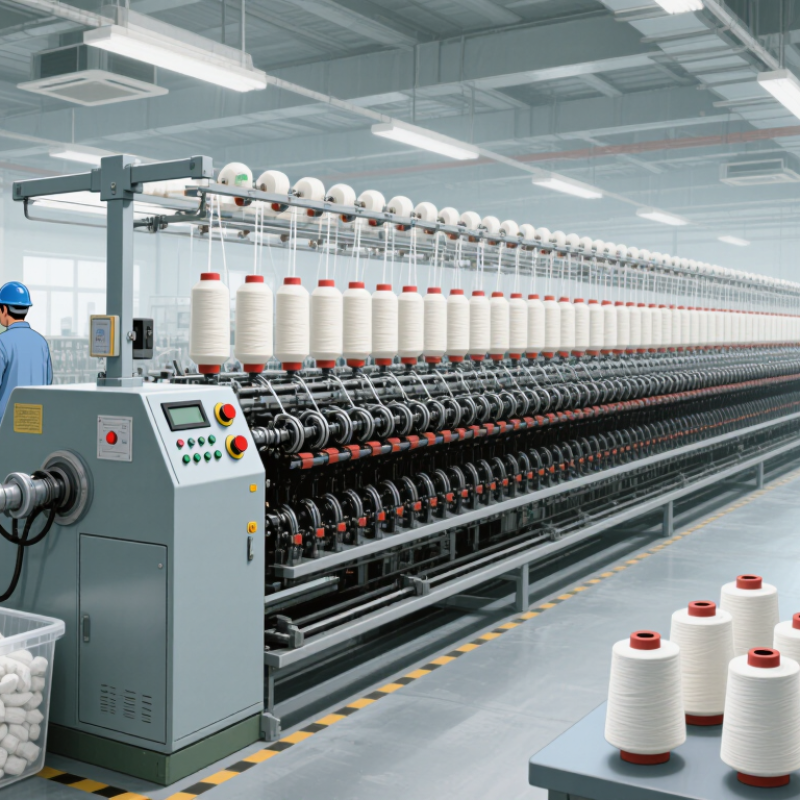
Understanding FDY yarn machine types starts with the production route. An FDY line usually converts polymer melt into fully drawn yarn through spinning, heating, drawing, intermingling, and winding. Integrated spin-draw-wind machines reduce handling between stages. Separate drawing and winding units offer easier process adjustments, but require more floor space and coordination. Single-end systems suit flexible trials, while multi-end systems support higher output.
The machine must match the target yarn specification. Check denier range, filament count, drawing ratio, heater temperature, and winding speed. These settings influence tensile strength, elongation, dye uptake, and package shape. For example, unstable heater temperature can create uneven yarn appearance and inconsistent fabric performance. Precise tension control matters too. Small tension changes may produce visible differences across a package.
Production records should guide the decision. Review energy use, waste percentage, changeover time, and maintenance access. A compact machine may save space but restrict future capacity. That trade-off is easy to underestimate. In production audits, operators often identify access to heaters and rollers as a daily concern. A technically advanced line can still perform poorly when cleaning is awkward. Test yarn samples under real operating conditions, including long runs and package changes. Laboratory results alone can be misleading.
Assessing Fiber Specifications and Required Output Capacity
How to Choose the Best FDY Yarn Machine?
Fiber specifications should guide the machine choice, not the other way around. Textile Exchange’s Materials Market Report 2024 estimates that global fiber production reached 124 million tonnes in 2023. Polyester represented about 57% of total output. This scale creates pressure for stable, high-volume FDY production.
Check denier, filament count, cross-section, luster, tensile strength, and shrinkage before comparing machine models. A 75-denier yarn with 36 filaments needs different metering and winding control than a 150-denier yarn with 48 filaments. Confirm the polymer viscosity range too. Small differences can affect spinning stability, dye uptake, and fabric hand feel.
Output capacity must match real orders. Calculate kilograms per hour from denier, spinning speed, filament number, and positions. Then reduce the theoretical figure for doffing, cleaning, yarn breaks, and planned maintenance. A practical utilization rate of 85% may be safer than using the brochure’s maximum capacity. ITMF’s International Textile Machinery Shipment Statistics also shows that filament-spinning investment changes with regional demand, so expansion should follow verified sales forecasts.
Leave room for testing. The highest speed is not always the best speed. Excessive speed can increase tension variation and package defects. I would request a trial using the intended polymer and target denier. This step costs time. It may prevent months of unstable production. Our first capacity estimate can still be wrong.
Evaluating Quality Control Systems, Maintenance, and Safety Features
Choosing the Best FDY Yarn Machine: Evaluating Quality Control Systems, Maintenance, and Safety Features
A reliable FDY yarn machine should control tension, temperature, speed, and winding pressure continuously. These controls protect yarn uniformity during long production runs. Look for sensors that detect denier variation, broken filaments, and abnormal vibration. Clear data displays help operators respond before defects spread across an entire package. I prefer systems that store production records for later review. They make quality discussions more factual.
Maintenance access matters just as much. Components should be reachable without removing half the machine. Inspect heating zones, godet surfaces, filters, lubrication points, and winding units during demonstrations. A useful machine provides maintenance alerts based on operating hours or measured conditions. Spare parts availability also affects downtime. I once underestimated cleaning time on a compact line. The machine performed well, but access was awkward. That experience changed how I evaluate practical design.
Safety features deserve equal attention. Emergency stops should be easy to reach from normal working positions. Guards must prevent contact with moving rollers and hot surfaces. Interlocking doors can stop operation when access panels open. Check whether alarms are visible and audible in a busy workshop. Operators also need clear instructions for threading, cleaning, and fault recovery. Good safety design reduces rushed decisions. Still, no system removes human responsibility. Training records, routine inspections, and realistic emergency drills remain essential.
Selecting a Supplier Based on Cost, Support, and Long-Term Value
Choosing the best FDY yarn machine starts with the supplier, not the brochure. A low purchase price can hide expensive downtime, difficult maintenance, or unstable yarn quality. Ask for a detailed quotation covering the machine, installation, training, spare parts, energy use, and shipping. Compare the cost per production hour, not only the initial invoice.
Request test data for your intended denier range and polymer type. Reliable suppliers should explain winding speed, temperature control, yarn tension, and expected output with clear figures. Visit an operating factory when possible. Watch how operators adjust the machine during a quality variation. That practical detail often reveals more than polished sales material. Check whether critical parts are stocked locally and ask how quickly technical support responds during a night shift.
Long-term value also depends on training and documentation. A useful supplier provides electrical diagrams, maintenance schedules, troubleshooting steps, and operator instruction. Speak with existing customers about downtime, service honesty, and replacement-part prices. References should include factories with similar output requirements. Be cautious with promises of zero problems. Our own first supplier comparison focused too heavily on price, and we underestimated training time. That mistake delayed stable production. A realistic evaluation should include a five-year maintenance budget, expected energy consumption, upgrade options, and the cost of production interruptions. Some figures will remain uncertain. Record those assumptions before signing.
How to Choose the Best FDY Yarn Machine? - Selecting a Supplier Based on Cost, Support, and Long-Term Value
| Evaluation Dimension |
Weight |
Supplier Profile A
Low Initial Cost |
Supplier Profile B
Balanced Value |
Supplier Profile C
Premium Support |
Preferred Target |
Machine configuration
Typical FDY line for polyester filament production |
— |
24 positions
Up to 120 t/month* |
32 positions
Up to 160 t/month* |
36 positions
Up to 180 t/month* |
Capacity matched to demand |
Estimated equipment investment
Machine, standard controls, and normal commissioning scope |
20% |
US$700,000–900,000 |
US$950,000–1,250,000 |
US$1,300,000–1,650,000 |
Fit within total project budget |
Expected power consumption
Indicative electricity use per kilogram of finished yarn |
15% |
0.95–1.10 kWh/kg |
0.85–1.00 kWh/kg |
0.80–0.95 kWh/kg |
Lowest verified consumption at target speed |
Production stability
Expected operational availability after commissioning |
15% |
92–94% |
94–96% |
96–98% |
At least 95% after ramp-up |
Warranty coverage
Standard coverage excluding consumables and misuse |
10% |
12 months |
18 months |
24 months |
Minimum 18 months |
Technical response time
Remote troubleshooting during production hours |
10% |
Within 24 hours |
Within 12 hours |
Within 4 hours |
Guaranteed response within 12 hours |
Critical spare-parts lead time
Availability of electronics, heaters, sensors, and drive components |
10% |
4–8 weeks |
2–5 weeks |
1–3 weeks |
Maximum 4 weeks |
Installation and operator training
On-site commissioning, operation, and maintenance instruction |
5% |
5–7 days |
7–10 days |
10–14 days |
Documented training and handover |
Expected service life
With planned maintenance and replacement of wear parts |
5% |
10–15 years |
12–18 years |
15–20 years |
At least 15 years |
Estimated five-year total cost of ownership
Investment, energy, routine maintenance, and critical spares |
15% |
US$1.05–1.35 million |
US$1.30–1.65 million |
US$1.65–2.05 million |
Lowest cost per kg, not lowest purchase price |
Illustrative weighted score
Based on the dimensions and weights above |
100% |
72/100 |
86/100 |
91/100 |
Target: 85+ |
| Best fit |
— |
Projects with strict upfront capital limits |
Most new production lines seeking balanced value |
High-volume plants where downtime is costly |
Select according to production risk and cash flow |
Planning note:
The ranges above are anonymous industry-planning benchmarks rather than quotations from any specific company or brand. Actual FDY output, energy consumption, investment, and total cost of ownership vary with yarn denier, polymer type, spinning speed, number of positions, operating schedule, local energy prices, installation scope, and labor costs. Request a machine layout, guaranteed performance data, spare-parts list, warranty terms, and a five-year cost model before making a purchasing decision.