
How to Choose the Right Yarn Spinning Equipment?
Choosing the right yarn spinning equipment is rarely a simple purchase. It is a production decision involving fiber type, yarn count, factory space, labor skills, energy use, and quality targets. A machine that performs well with cotton may struggle with wool, recycled fibers, or delicate blends. The best choice depends on actual operating conditions.
In practice, equipment selection should begin with the yarn’s intended use. Knitting yarn may require different strength, softness, and hairiness control than weaving yarn. Operators should examine spindle speed, drafting accuracy, rotor or ring technology, automation, maintenance access, and spare-part availability. A clear trial with the intended fiber can reveal problems that a sales brochure may hide. Small details matter, such as lint around sensors or vibration near the winding unit.
Reliable decisions also require evidence. Compare manufacturer specifications with independent test results, service records, energy data, and feedback from mills using similar fibers. Established suppliers should explain installation requirements, training support, safety controls, and expected production limits. These details help buyers judge yarn spinning equipment beyond its advertised output.
There is no universal machine.
A lower purchase price may create higher costs through waste, downtime, or inconsistent yarn quality. However, advanced automation is not always the right answer for every mill. Budget, workforce experience, future orders, and local technical support must remain part of the evaluation. Even experienced managers can misjudge demand. Rechecking assumptions before signing a contract is practical, not hesitant. This guide explores the main equipment choices and the questions that support a dependable investment.
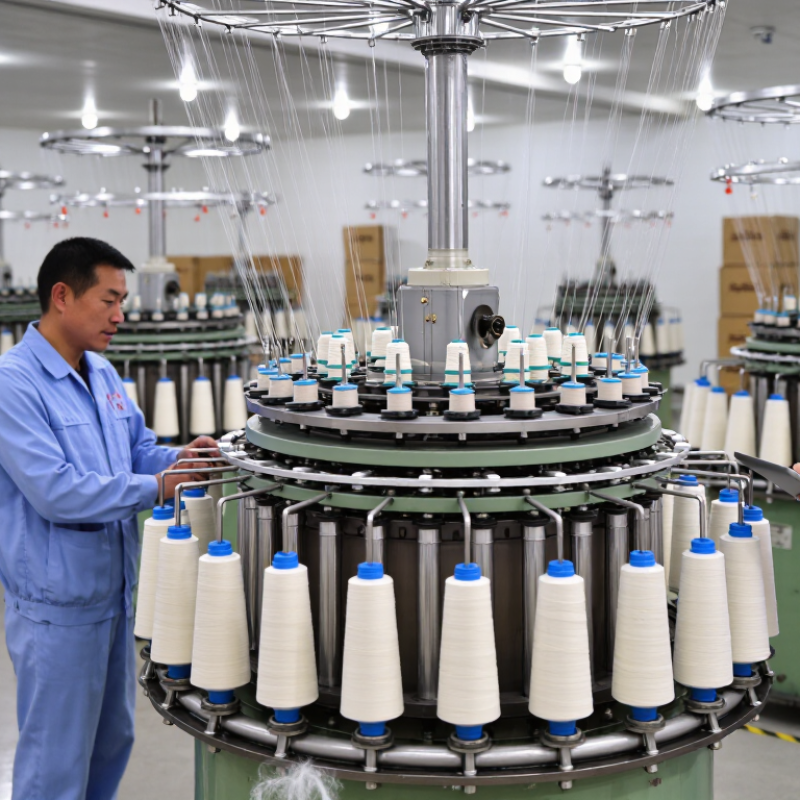
Define the Yarn Type, Fiber, and Production Requirements
Choosing yarn-spinning equipment starts with the yarn, not the machine brochure. Define the end use: denim, socks, shirting, knitting, technical fabric, or sewing thread. Each application demands a different balance of strength, elongation, hairiness, evenness, and twist. A coarse rotor yarn may suit durable denim. A fine ring yarn may better serve smooth shirting. Air-jet yarn can offer low hairiness, but its structure must match the fabric process. Measure the target. Specify yarn count, twist, strength, acceptable imperfections, and package format before requesting quotations.
Fiber decisions narrow the equipment choice. Record staple length, micronaire or fineness, moisture regain, contamination risk, and blend ratio. Cotton, recycled cellulosic fibers, polyester staple, and blends do not open, draft, or spin identically. Textile Exchange’s Materials Market Report 2024 estimates global fiber production reached 124 million tonnes in 2023. It projects about 160 million tonnes by 2030. This growth increases pressure to evaluate recycled inputs, traceability, and fiber preparation, not only spindle speed. A recycled blend may need gentler opening and stricter trash control.
Production requirements should be numerical. Set daily kilograms, operating hours, target efficiency, labor availability, energy limits, and acceptable waste. Compare trial results under controlled humidity, following relevant methods such as ISO 2060 for linear density. ITMF shipment statistics separate ring-spindle, rotor, and air-jet technologies, reinforcing a practical point: capacity data means little without the correct spinning route. I have seen projects overvalue maximum speed and undervalue maintenance access. That mistake becomes expensive. Leave room for uncertainty. Fiber lots vary, operators learn, and ideal efficiency may not survive the first month.
| Target Yarn Type | Typical Fiber and Blend | Indicative Yarn Count Range | Recommended Spinning Equipment | Key Equipment Characteristics | Production Priorities | Quality and Process Considerations |
|---|---|---|---|---|---|---|
| General-purpose cotton yarn | Cotton with staple length commonly around 25–32 mm; may include recycled cotton or small proportions of synthetic fiber | Ne 10–40 Approximately Nm 17–68 |
Ring spinning system | Opening and cleaning line, carding, drawing, roving, ring frame, and winding | Balanced yarn quality, broad count flexibility, reliable production, and suitability for woven and knitted fabrics | Requires careful control of fiber alignment, nep level, twist, traveler selection, spindle speed, and winding tension |
| Fine and premium cotton yarn | Long-staple or extra-long-staple cotton, generally with good fiber uniformity and low short-fiber content | Ne 40–120 Approximately Nm 68–203 |
Compact ring spinning system | Ring spinning with a compacting device that reduces the spinning triangle and improves fiber control | High strength, lower hairiness, improved fabric appearance, and suitability for fine shirting, luxury knitwear, and sewing applications | Needs high-quality fiber preparation, precise drafting, stable humidity, accurate roving, and close monitoring of end breaks |
| Medium-count blended yarn | Cotton/polyester, viscose/polyester, cotton/viscose, or other controlled staple-fiber blends | Ne 16–50 Approximately Nm 27–85 |
Ring or compact ring spinning system | Separate or integrated blending preparation, multi-stage drawing, roving, ring spinning, and automatic winding | Blend uniformity, consistent dyeing behavior, strength, and stable operation across different fiber components | Blend ratio, fiber length compatibility, moisture regain, static electricity, and drafting behavior must be controlled carefully |
| Coarse and medium rotor-spun yarn | Cotton, recycled cotton, viscose, polyester, or blends with staple lengths generally suitable for open-end spinning | Ne 6–40 Approximately Nm 10–68 |
Open-end rotor spinning system | Opening and cleaning, carding, drawing, rotor spinning, and package winding; roving is normally not required | High productivity, lower labor requirement, efficient processing of shorter fibers, and economical production of coarser yarns | Yarn structure differs from ring yarn; rotor speed, trash removal, fiber cleanliness, twist level, and rotor condition affect quality |
| Soft, bulky, or low-twist yarn | Viscose, modal, lyocell, cotton, and selected blends requiring softness and good moisture absorption | Ne 16–40 Approximately Nm 27–68 |
Air-jet spinning system | Carding, drawing, drafting, air-jet spinning, and winding; the process uses air vortices to wrap surface fibers around the core | High delivery speed, reduced hairiness, quick doffing, and efficient production for knitting and selected woven fabrics | Fiber length distribution, drafting stability, air pressure, nozzle cleanliness, and yarn strength must be evaluated for the intended end use |
| Synthetic staple-fiber yarn | Polyester, acrylic, nylon, or blends with cotton, viscose, or other man-made staple fibers | Ne 10–60 Approximately Nm 17–102 |
Ring, compact ring, rotor, or air-jet system depending on count and application | Fiber-specific opening, antistatic control, precision drafting, spinning, and winding equipment | High output, stable running, low breakage, controlled elongation, and consistent dye uptake when blending is required | Static buildup, thermal sensitivity, crimp, fiber friction, blending accuracy, and heat generated during high-speed processing require attention |
| Recycled-fiber yarn | Recycled cotton, recycled polyester, or recycled blends with virgin fibers | Ne 6–30 Approximately Nm 10–51 |
Rotor spinning or modified ring spinning system | Enhanced pre-opening, intensive but controlled cleaning, carding, drawing, and spinning equipment with waste-management capability | Efficient use of shorter fibers, reduced waste, acceptable yarn evenness, and commercially viable production | Short fibers, neps, foreign matter, and variable fiber quality may reduce strength; blending with virgin fiber can improve process stability |
| High-strength technical yarn | High-tenacity polyester, nylon, aramid, or other engineered staple fibers | Application-dependent; often coarse to medium counts | Specialized ring or other fiber-compatible staple spinning system | High-precision drafting, robust spindle or rotor components, controlled tension systems, and specialized winding | Maximum tensile strength, controlled elongation, abrasion resistance, dimensional stability, and dependable package formation | Fiber compatibility, surface finish, twist multiplier, heat sensitivity, and downstream coating or weaving requirements determine equipment configuration |
| Sewing and embroidery yarn | Long-staple cotton, polyester, polyester/cotton, or other fibers selected for smoothness and abrasion resistance | Fine counts, commonly Ne 40–120 depending on application | Compact ring spinning with precision winding and, where required, plying and finishing equipment | High-control drafting, compact spinning, precision winding, optional doubling or twisting, and lubricant application | Low hairiness, high tensile strength, smooth running, consistent package density, and low needle heating | Twist balance, hairiness, lubrication, tensile variation, knot quality, and winding precision are critical for sewing performance |
| Fancy or effect yarn | Cotton, wool, viscose, polyester, acrylic, metallic, or mixed fibers designed for decorative effects | Count and structure vary widely | Specialized ring, hollow-spindle, core-spinning, or effect-yarn equipment | Additional feeders, core-yarn delivery, programmable drafting, controlled overfeed, and specialized winding or twisting units | Repeatable visual effects, controlled slub or boucle formation, flexible product changeover, and small-batch capability | Effect repeat length, carrier tension, core coverage, component compatibility, and package stability must be specified before equipment selection |
Note: Yarn count ranges are indicative industry planning values. Final equipment selection should be verified against fiber length, micronaire or fineness, blend ratio, target strength, twist, machine capacity, required annual output, energy consumption, and downstream fabric performance.
Related Posts
-
Top Yarn Spinning Equipment for Global Buyers
-
How to Choose the Best Yarn Spinning Equipment?
-
What Is the Best Yarn Spinning Equipment in 2026?
-
2026 Top Automatic Yarn Spinning Machine Types?
-
Why Choose an Automatic Yarn Spinning Machine?
-
How to Choose the Best Yarn Spinning Equipment for Your Needs